

The Super Bowl is one of the most iconic events in American culture, known not just for the sport it centers on, but for its memorable and often viral advertisements.
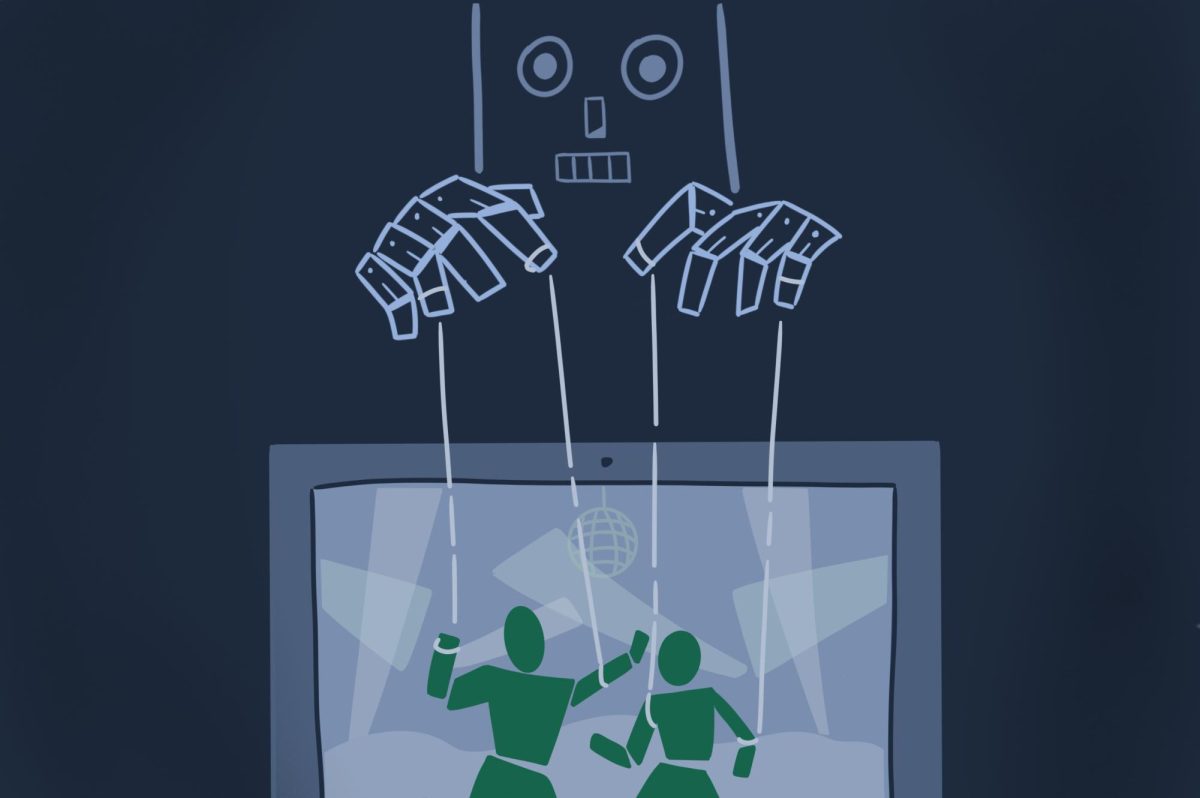
This year, as people surrounded their screens to watch the Seattle Seahawks and New England Patriots fight for the 60th Super Bowl Championship title, they weren’t given the entertaining advertisements that normally follow breaks between plays. Instead, they were bombarded with a flurry of ads that either promoted Artificial Intelligence (AI) or were made with AI.
AI has been in the public eye for some time now, with chatbots such as ChatGPT and video-producing bots such as SoraAI growing in popularity. These applications can be used to produce full-length essays and fake, but life-like, videos. AI has become more accessible for the average person and is only growing in popularity.
Although AI has become increasingly popular and is starting to play a larger, more normalized role in people’s lives, its negative environmental effects deserve more attention. A single large AI model can emit an estimated 626,000 pounds of carbon dioxide during its training alone. Not only does it produce an absurd amount of carbon dioxide, but it also uses large amounts of water to cool the necessary data centers, with Google using 19.5 million cubic meters of water just to cool its data centers in 2022.
Not only does AI decimate the environment, but it also significantly affects people’s livelihoods, especially artists. As AI has gotten more intelligent, people have started using it to produce art, or a very lackluster imitation of art that lacks human spirit. Many artists have been outspoken against the use of AI in art spaces, as it takes away from real artists trying to make a living, and it also steals their art in order to train the model to produce images.
Advertising AI products isn’t new, but during the Super Bowl, those ads reach a huge audience. This year’s Super Bowl viewership reached an estimated 124.9 million people. That impact is enormous and has the opportunity to influence millions of people; that’s why Super Bowl ad spots are so sought after by companies. Of the ad spots, 15 of 66 spots were taken up by AI companies in the 2026 Super Bowl. Companies such as OpenAI were selling their platforms directly, and others like Svedka, had their entire advertising produced with AI, cutting out the middleman of hiring a visual arts team to produce it for them.
There were also ads that felt very dystopian. A notable example was an ad for the home security camera company Ring, which promoted the use of AI in Ring cameras to help identify lost pets. Although it may seem innocent on the surface level, it takes on a whole new, darker meaning when you realize not only can these cameras identify pets, but they have the potential to identify people if their security is breached. After the backlash Ring received for the ad, it ended its partnership with the security firm and no longer plans to implement this feature.
Advertising AI during one of the most-watched events in America not only normalizes it, but it also encourages it. This leads more people to start using AI in their everyday lives and only contributes further to the consequences and effects that it has on the environment and people.
The use of AI diminishes real human creativity. It takes away from people’s passions and hobbies and only drains life out of what art has the potential to be. A majority of human existence has been defined by human innovation and the production of art, and all AI does is take away from that.
AI should have no place in creative spaces that are meant for human hands, especially not on one of America’s largest stages.






Cole
Feb 19, 2026 at 1:27 pm
Support real artists!! Not AI slop 🙂