

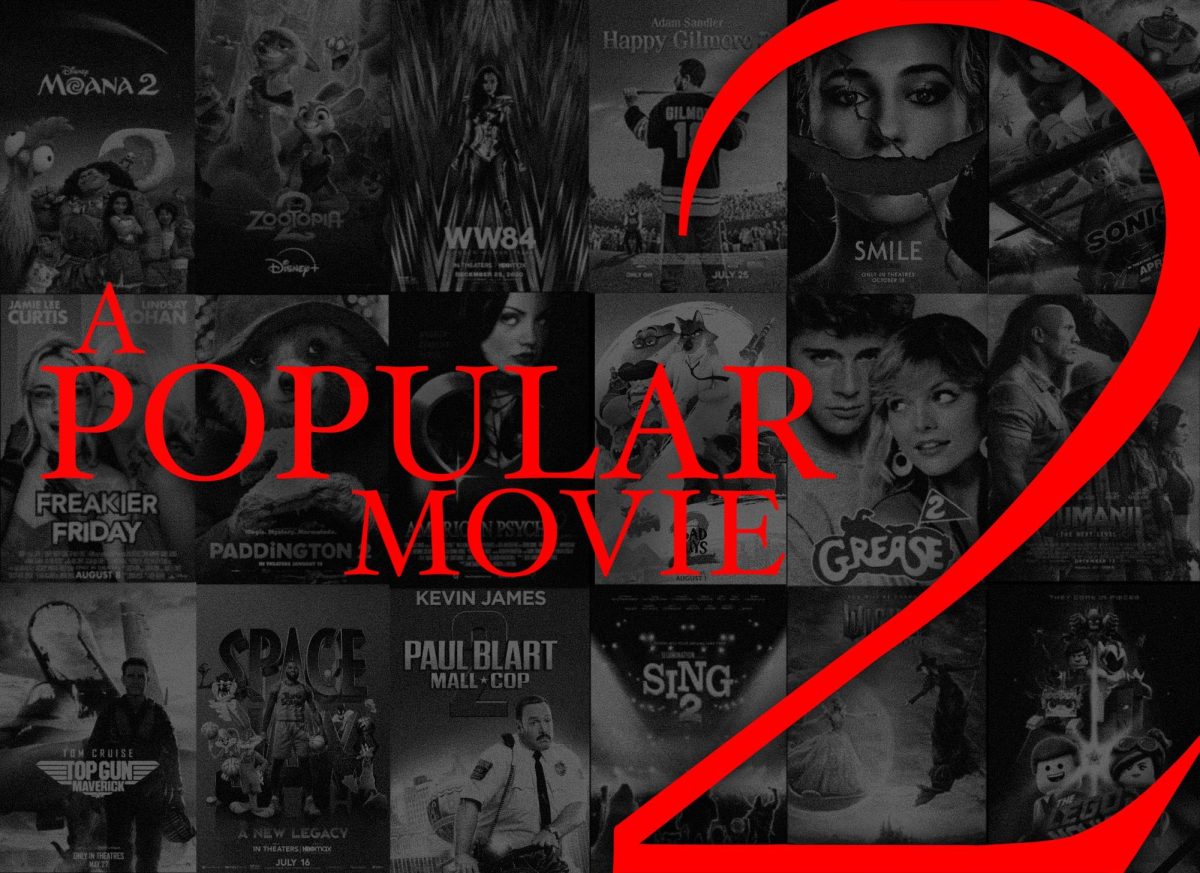
As I scroll through Letterboxd or the homepage of Netflix in search of a new, original and creative movie, all I can find is sequel slop with low-effort writing, cameos galore and low-quality production design. When reflecting on the trailers and ads I’ve seen throughout the past year, I can name more sequels, franchise films or other derivative works than I can name original films. Derivative films are based on previously copyrighted works or intellectual property, such as adaptations, spinoffs or remakes.
More and more movie-watchers and theater-goers are left questioning where all the original stories have gone, and why all of the rebooted or remodeled stories seem so cheap. As an audience member, this trend of derivative films seems like a series of cash cows, draining the theaters of any enjoyable, new content. By pushing out sequels, spinoffs and remakes, studios can get away with quickly and inexpensively producing films by expediting certain aspects of the production process. These derivative works also yield good results in the box office and guarantee audience support as the studios are able to pick from a selection of widely loved films to slightly modify and suck the soul out of.
When looking online for new movies to watch, I stumbled upon a Rotten Tomatoes article titled “The Most Anticipated Movies of 2026.” The list includes 53 films in total, and 39 of them fell into the category of films at hand. Many of these sequels, adaptations or other unoriginal films are from series that came out years ago, either before or during my childhood.
While there is nothing wrong with these sequels at face value, what struck me was the selection of sequels that were not well-received by audiences because of their low production quality. It is becoming increasingly apparent how capitalism has a destructive effect on the film industry as large corporations such as Paramount Skydance Corporation buy out studios like Warner Bros., and, more importantly, how audiences are responding to the sterile nature of films produced within a fast, capitalist industry.
Just within the past year, almost half of the films I saw in theaters and the majority of the films I saw being advertised in theaters were sequels, franchise films, live-action adaptations or other iterations of the new, cheap, flashy, yet unoriginal movies. To name a couple of these films, I watched “Five Nights at Freddy’s 2” and the live action reboot of “How to Train Your Dragon.”
Personally, I felt compelled to watch these films purely out of nostalgia, not because I was expecting them to bring any new themes or interesting visuals to the table. For both of these live-action adaptations, I went in expecting very little because I was already aware and fond of the source material. As a result of my pre-existing knowledge of the “Five Nights at Freddy’s” games and the animated “How to Train Your Dragon” movies, I felt like whatever derivative material the writers, directors and producers came up with would not compare to the nostalgic gold from my childhood.
When comparing the second FNAF movie to the games it is based on, the movie seemed to neglect the iconic aesthetic and puzzling lore of the games. As a long-time fan of the franchise, I felt that in both “Five Nights at Freddy’s” movies, the writing and execution felt cringy and failed to capture the horror and aesthetics I love from the games.
While the 2025 live-action adaptation of “How to Train Your Dragon” did not deviate too much from its original source material (most of the dialogue, characters, and story remain the same, with the exception of a couple of scenes), the new adaptation felt unnecessary because so much of the material from the original film remained unchanged.
I find it especially careless when derivative films remain almost identical to whatever they are derived from, because they feel like a waste of the studio’s time and money that could otherwise be going to an original script. I am honestly starting to prefer the drastically different derivative films as they at least show some semblance of creativity.
One could argue that these new films are being made to create more films for the new generation to enjoy and attach memories to, but why recreate or alter old stories when the new generation could be given a wave of new stories to enjoy? I firmly believe that if the old stories were already loved by a large audience, there is no need to change or reproduce them. Just show the old films to the new generation so they can enjoy them as well.
For those of us seeking new movies and viewing experiences, there’s hope in independent films. I recommend checking out the Northwest Film Forum or SIFF if you are able and interested in supporting local and independent theaters and filmmakers. There are plenty of new movies to be excited for, for example, Boots Riley’s newest film “I Love Boosters” starring Keke Palmer and Naomi Ackie or Curry Baker’s horror film “Obsession” starring Michael Johnston and Inde Navarrette.



![[incoherent screaming as I login to linkedin]](https://seattlespectator.com/wp-content/uploads/2026/05/Jobs-opinion-color-1200x798.jpeg)

