
Have you ever wanted to read peer-reviewed academic papers ranging from environmental studies to public affairs to English to psychology, written by none other than Seattle University students? Look no further than the 10th Volume of the Seattle University Undergraduate Research Journal (SUURJ), launching June 4, 2026.
SUURJ is an interdisciplinary journal focused on uplifting undergraduate research by giving students the opportunity to publish their work in an online, peer-reviewed publication. What started as a group of student Writing Center Consultants dreaming of an undergraduate research journal at Seattle U has become not only one of the more memorable and pronounceable acronyms on campus, but an internationally read and cited publication. The journal’s 10 volumes, which are available to read on ScholarWorks, have been cited in books, scholarly journals, think tanks, media outlets and everything in between.
“The map of readership spans almost all the continents, bar Antarctica,” Third-Year Creative Writing Major and SUURJ student editor Rhainne Coyle said. “Some of the past authors still get email updates on ScholarWorks that are like ‘Your article was cited in this academic journal,’ and it’s something in Poland. They can access it on ScholarWorks and see every time that their publication has been cited, which is pretty cool.”
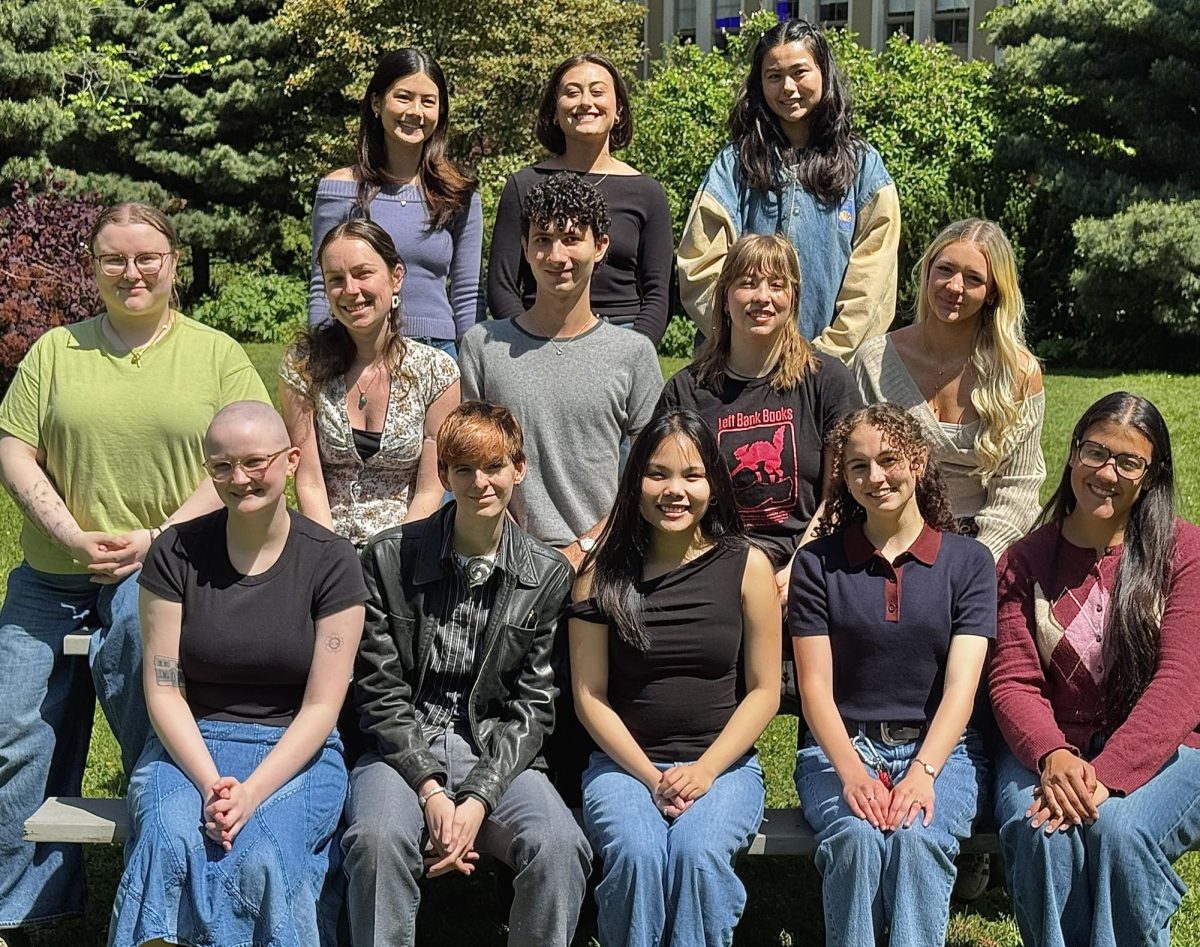
Teaching Professors Hannah Tracy and Tara Roth have worked as SUURJ’s chief faculty editors for the past six years. Roth is also the director of the Office of Undergraduate Research (UGR) and a member of the Council on Undergraduate Research that provides faculty-mentored research opportunities for undergraduates. The offices’ annual spring event, the Seattle University Student Research and Creativity Conference (SRCCon), invites students and alumni of all disciplines to present their research in person.
“SUURJ is an institution,” Roth said. “It took a team—student editors, faculty content editors and partners. It [took] a decade to grow, and now our institution tells our research story to the world beyond what’s happening on campus.”
SUURJ takes place in a course that spans three quarters. Fall quarter is five credits, and students spend the initial weeks reading, discussing and deciding together on which papers should be published. Students then pick their top choices for papers to edit during winter quarter. Fall quarter also focuses on teaching students how to copyedit.
“You get a very large scope of how grammar can be useful to writing, and then you get to apply it in a way that other classes don’t let you,” Third-year English Literature and Political Science double major Camila Torres said. “In most of my classes, I’ve been the author and I’d never been the editor. Going through a paper and combing through each sentence in that way, through that lens, has been really transformative in the way I look at papers now.”
Winter quarter of SUURJ is two credits, and is primarily focused on each student editing their respective papers and working with writers. Coyle spent winter quarter editing her first-choice paper and the second creative fiction piece to ever be published in the journal: “School-to-Prison Pipe Dream” by Kadeen Fraiser, a satirical piece about the school-to-prison pipeline. Last edition saw the publication of “Gold Fever” by Dylan Berman, a historical fiction piece about the gold rush. Creative pieces, like any other paper in SUURJ, are required to be grounded in extensive research.
The 10th edition also includes a paper from Fourth-Year Interdisciplinary Liberal Studies major Olivia Cimino titled “Toward Liberation: Decolonizing Curriculum to Heal Double Consciousness in Students of Color,” one of the last papers to be published from the recently cut Interdisciplinary Liberal Studies major.
Some larger papers had two students as co-editors, one of which was “The Child Figure in Climate Fiction: Redefining Community and Culture in the Face of Climate Change” by Allison Wasley, edited by Torres and Fourth-year Creative Writing Major Hope Onstad.
“We went to cafes and talked stuff out with our MLA handbooks nearby,” Onstad said. “It’s super fun to work one-on-one with someone on an editing project, because you can bounce ideas off each other instead of just pondering it yourself. I would know more about one thing and she would know more about another thing—it worked really well.”
Spring quarter is three credits, and has the class prepare the journal for publication by dividing into four teams: marketing, design, event planning and recruiting. Students focus on preparing the journal for publication—maintianing a presence at on campus events, compiling contributor biographies and putting together the journal’s table of contents, masthead and letter from the editors. The event planning team puts together the SUURJ launch party, where students, faculty and community members involved with the journal celebrate the release and graduating editors receive chords.
“Students are doing research in our classes that’s pushing the envelope, that’s doing things that haven’t ever been done before, looking at things that people haven’t thought to look at before and we’re always excited to be a place where that research can get published…” Tracy said. “This would not be possible without our incredible student editors who make this journal what it is.”

![Peggy, Mink and Bladee Make Good on Threats to Drop Music [REVIEW]](https://seattlespectator.com/wp-content/uploads/2026/05/unholytrio-review-web-1200x900.png)