

What began as a University of Washington-affiliated program at Providence Hospital in 1935 has grown into a nationally recognized program ranked in the top 5% in the country—the College of Nursing and Health Sciences (CNHS) is celebrating its 90th anniversary, wearing a new name and welcoming a new program.
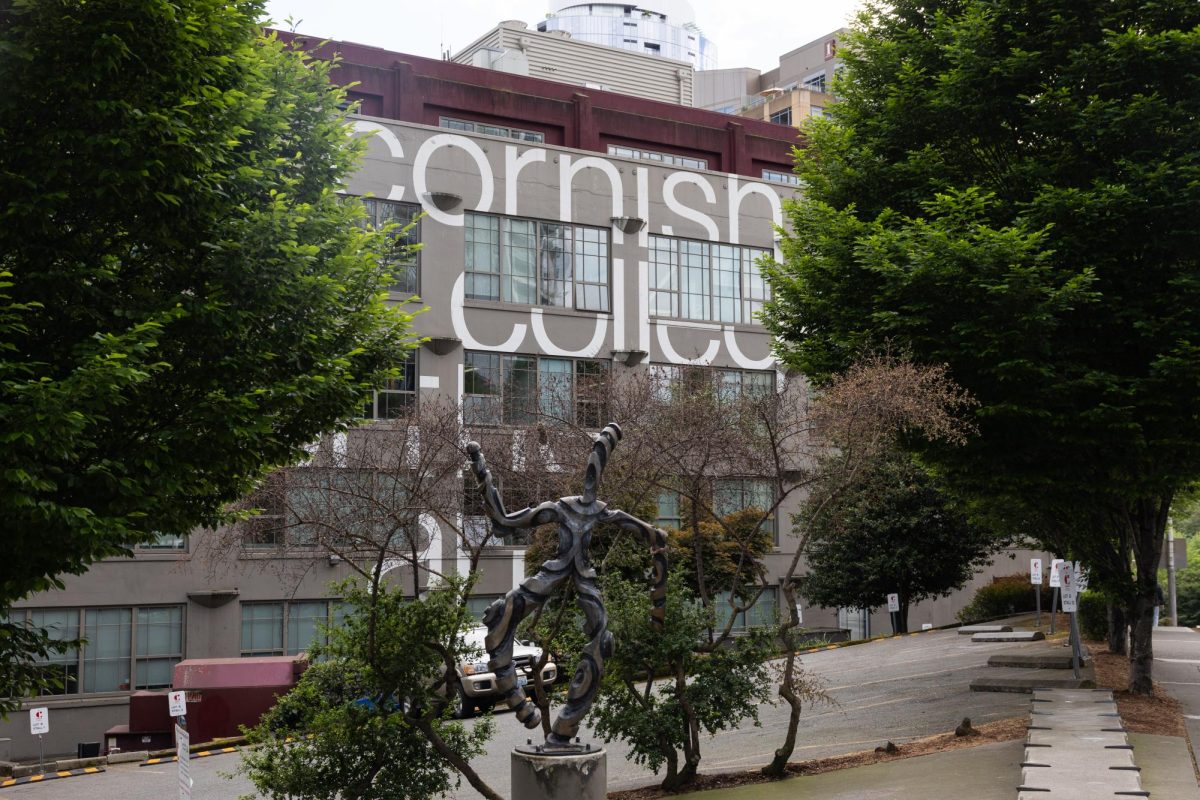
Housed in the Garrand building, the oldest building on campus, the nursing school officially became part of Seattle U (then still known as Seattle College) in 1934, and its first class graduated shortly thereafter in 1939. Since then, the program has steadily expanded to offer degrees in Diagnostic Ultrasound, graduate-level nursing education, advanced practice roles and, in the near future, a master’s degree and graduate certificate in public health.
Dean of Nursing Butch de Castro reflected on the college’s legacy.
“The change in the program to be more widespread over the last 90 years has caused a gain in national knowledge about the program,” de Castro said. “The anniversary isn’t just a marker of time. It shows how much the program has grown alongside the city’s healthcare needs.”
Shifting Programs: Kinesiology Joins College of Nursing and Health Sciences
As of this year, the Department of Kinesiology has officially moved out of the College of Arts and Sciences (CAS) and into the CNHS. Academically, this is a major realignment for the program. Kinesiology, which studies human movement, athletic performance and the science behind physical activity, was academically out of place in its previous college, surrounded by programs that didn’t match its focus.
Dean of Kinesiology, Julius Moss, explained that the kinesiology program transitioning from the CAS to CNHS naturally aligns with the rest of the degree programs. Patient mobility, injury recovery and exercise physiology complement the college’s thread of caretaking.
“It was always treated as separate, but now, due to its integration, it’s seen as a health science, and is able to work more collaboratively with the CNHS. For kinesiology students, the new home means access to a college where everyone is doing some kind of health-focused work,” Moss said.
Second-year Softball Student-Athlete and Kinesiology Major Maya Mesa agrees with Moss on the collaborative element. Although the change has not yet been fully implemented, she has already noticed changes.
“It makes a lot more sense for the program to be integrated, and helps with finding future jobs, even though it has caused a bit of class mixup due to no longer being in the College of Arts and Sciences,” Mesa said.
With kinesiology and nursing now part of the same college, collaboration between programs is becoming easier. Kinesiology students often partner with athletes and community organizations, while nursing students are involved in clinical placements, public health projects and outreach in Seattle neighborhoods.
In addition to making existing collaborations smoother and easier, the integration creates new and unique opportunities for inter-program work. Kinesiology’s mobile labs, which provide performance assessments and wellness screenings, can pair naturally with nursing students in community health, giving students a more well-rounded view of the people they serve. There are also more opportunities for research across disciplines, with kinesiology, nursing and ultrasound all housed in the same college.
Seattle U’s Innovative Diagnostic Ultrasound Program & Clinical Performance Labs
In 1978, Seattle U added its Diagnostic Ultrasound (DIUS) program, blending medical imaging with hands-on clinical work. Founded by leading sonographer Joan P. Baker, it was noted as one of the first baccalaureate programs of its kind in the nation. Many other institutions offer only certificate or associate-level training, but Seattle U offers a four-year Bachelor of Science in Diagnostic Ultrasound, with specialized tracks in general, cardiac or vascular.
Last year, the program was selected as one of three universities nationwide to pilot a study on virtual reality (VR) ultrasound, in partnership with Inteleos and Vantaru VR. As of this fall, the university has been named an official Inteleos/Vantari Beta Site, granting students and faculty early access to new VR modules. Through testing headsets and software that simulate real ultrasound procedures, the partnership is a valuable learning opportunity for current and incoming students, as VR has the potential to become a new standard in delivering advanced patient care.
Another site for hands-on learning is the Clinical Performance Lab, located only a few blocks from the First Hill campus at Swedish Cherry Hill Medical Center. The 20,000 square foot facility offers nursing simulation suites, laboratory areas and teaching spaces.
One opportunity students explore is different patient problems using manikins in simulation suites, ranging from labor and delivery to CPR. Some are even equipped with realistic lung, heart, bowel and fetal heart sounds. This allows them to develop skills like patient interaction, testing and analysis. Another opportunity for nursing students in the undergraduate program is a high-fidelity simulation featuring trained actors portraying family members in the environment.
Second-year Nursing Major Sophie Bourassa explained that the lab’s realism makes a difference, almost like stepping onto an actual hospital floor.
“Clinical training includes manikins, IV prep and more, which is all hands-on rather than watching a video or slideshow,” Bourassa said. “The point is to give students a place where they can make mistakes safely before entering real clinical settings.”
The nursing program was the first in the Pacific Northwest to receive “Healthcare Simulation Standards Endorsement” from the International Nursing Association of Clinical Simulation and Learning.
How the Role of Nursing is Evolving
A growing shortage of primary care doctors has led to an increasing reliance on nurse practitioners and allied health workers to fill the gap. Nurse practitioners work in communicating patient needs, gaining education to focus on preventative care and becoming front-line leaders; they’re also being trained how to prescribe medications, make diagnoses, order tests and oversee treatments, all work traditionally done by doctors.
By 2036, the Association of American Medical Colleges estimates a shortage of 20,200 to 40,400 primary care doctors. This is attributed to a few factors: the decline of graduating physicians choosing primary care as a path, increasing numbers of professionals retiring (two of every five physicians will be 65 or older in the next decade) and lower starting salaries in comparison to specialties such as orthopedics and dermatology.
“There’s really very little that we can do in medical school to change people’s career trajectories,” Kevin Grumbach, a professor of family and community medicine at the University of California-San Francisco, said to CBS News.
The Bureau of Labor Statistics’ Employment Projections 2022-23 predicts that registered nurses (RN) will expand by six percent in the next decade, which will grow the workforce to 3.3 million, an increase of 177,440 nurses. The Bureau also projects 193,100 registered nurse openings each year through 2032, factoring in retirements and the number of nurses needed in the United States.
As the CNHS continues to broaden its academic offerings and shift its commitments to align with workforce needs, the next generation of caretakers is emerging. Seattle U prepares them with skills applicable to an ever-changing and demanding occupation.
As the college enters its next chapter, de Castro believes the school will continue to evolve while staying grounded in Seattle U’s mission. The hope is that as the interdisciplinary programs grow, community partnerships will deepen and that students will graduate not just with strong technical skills, but with a strong sense of purpose and lasting commitment to collaboration. The 90th anniversary is not just an opportunity to celebrate, but a chance to look forward to decades of continued growth and opportunity.