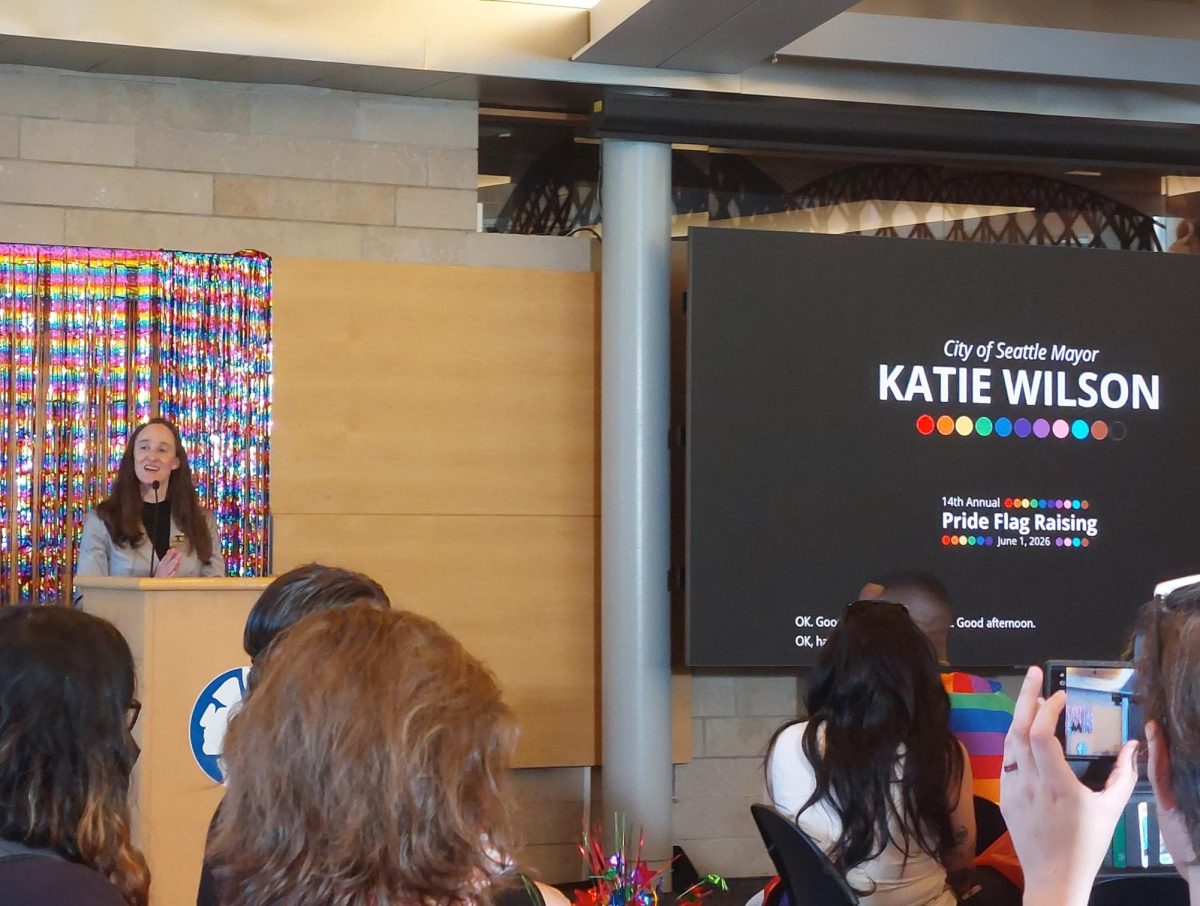


On election night, mayoral favorite and progressive challenger Katie Wilson was down almost 8% to incumbent Bruce Harrell. Each following day, updates showed mail-in votes eroding Harrell’s lead, keeping both sides’ supporters on edge. After eight uncertain days, Katie Wilson was declared Seattle’s next mayor, edging Harrell out by less than a percentage point and only 2,033 votes.
The election was among the tightest mayoral races in Seattle history. The race was within the margins to allow a recount, but Harrell ultimately decided against it and conceded the race to Wilson in a speech Nov. 13, congratulating Wilson on her success.
The election of Katie Wilson follows a national trend of many other moderate Democrats being elected across the country this November, such as Mikie Sherrill and Abigail Spanberger winning the governorships of New Jersey and Virginia, respectively. Although both major candidates in the Seattle election were Democrats, Wilson’s more leftist beliefs and her alignment with the popular New York City mayor-elect, Zohran Mamdani, could have helped her gain an advantage.
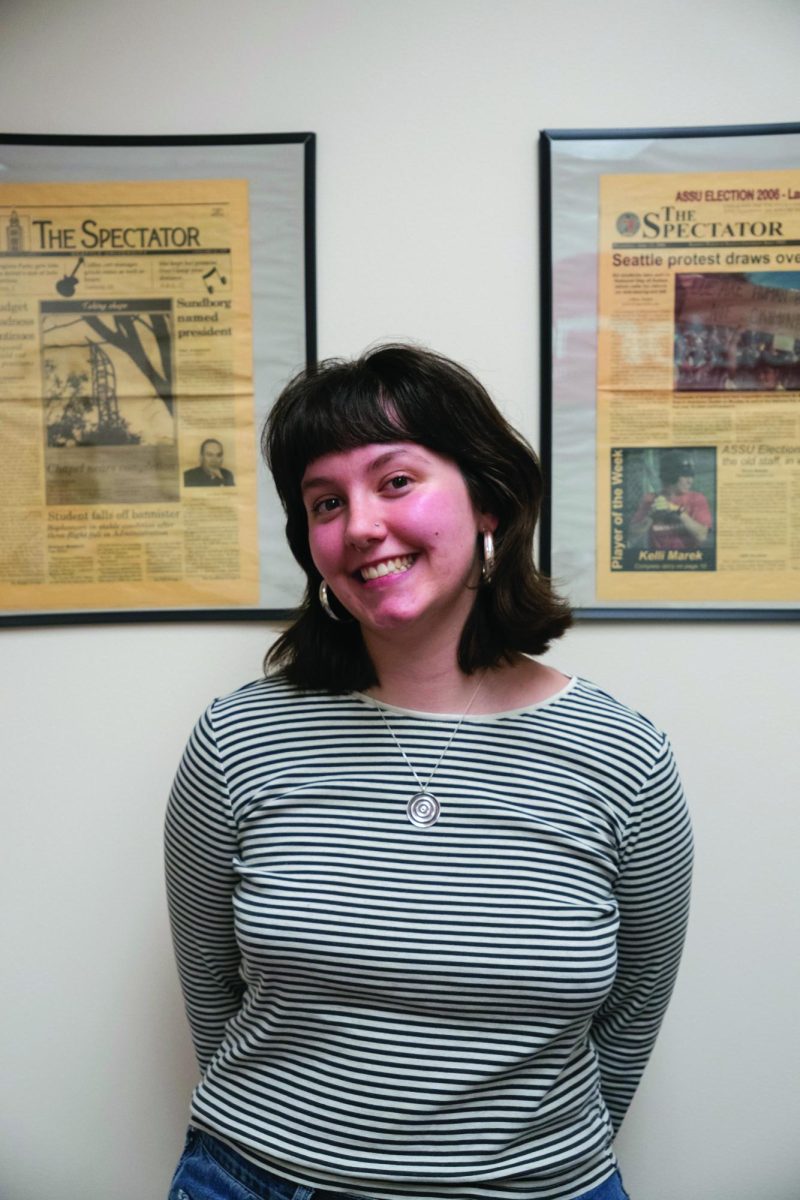
“I think she ran her campaign beautifully. I think that she should have gotten just as much attention as Zohran Mamdani, especially as a Democratic Socialist. I think working under that ideology is crucial for Seattle, especially because homelessness is so prominent here in the city,” Karli Calo, a fourth-year political science and philosophy double major and president of the Political Science Club, said.
Although the official Seattle general election took place Nov. 4, results weren’t released until Nov. 12. Compared to other elections around the country, the Seattle mayoral election took significantly longer, partially due to Washington elections being run entirely by mail.
“I was nervous because I felt like the results were fluctuating quite a bit, and it looked like Bruce was in the lead for a while, and then a week and a half later, you find out Wilson has won. That system keeps you on your toes, and it’s not the best system to have,” Calo said.
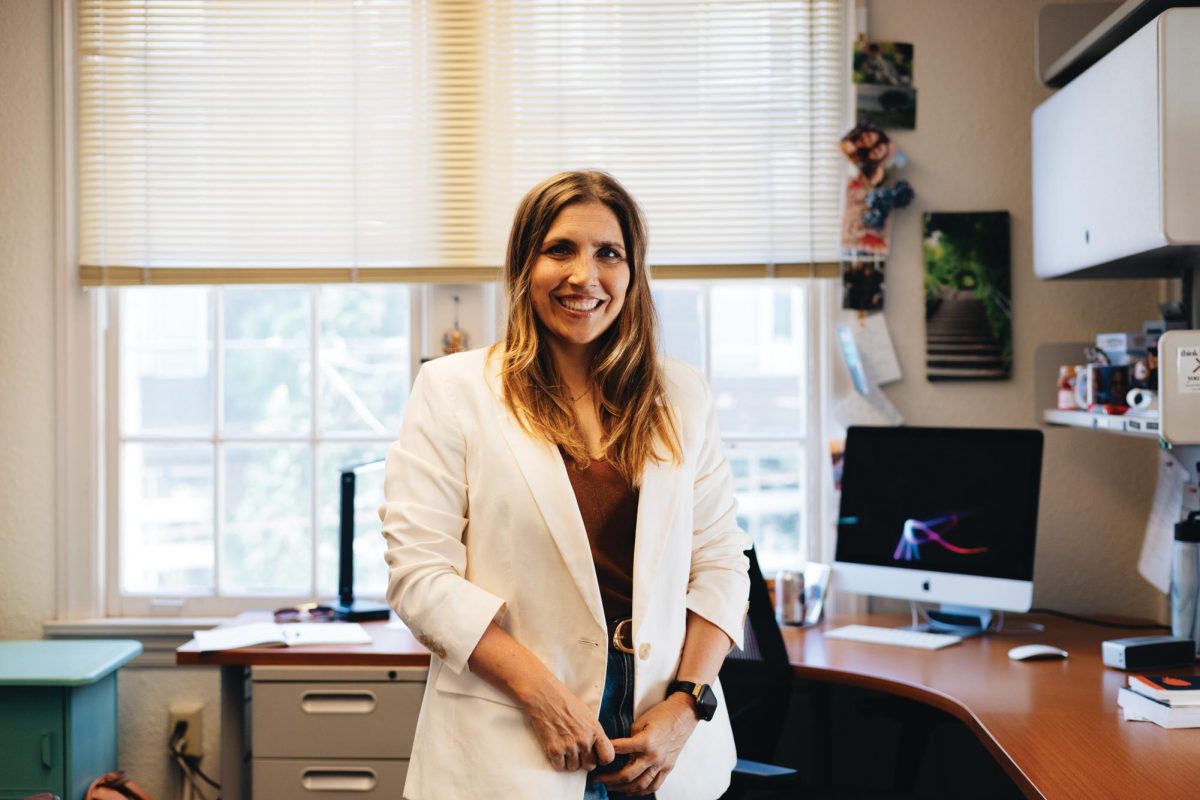
Harrell and Wilson faced off in a lively debate Oct. 9 at Seattle University’s Pigott Auditorium. According to Adjunct Professor of Political Science, Patrick Schoettmer, the number of debates this election cycle was unusual.
“I think that was in no small part a product of our democracy voucher program, which meant they were somewhat limited in the amount of money they could raise, and so debates became a way to get a lot of free advertising,” Schoettmer said.
Launched in 2015, the democracy voucher program provides an easier pathway for Seattle residents to participate in local politics and even run for office themselves. The program also limits the amount of funding that campaigns can receive from lobbyists and contractors.
Calo, who volunteered for Wilson’s campaign, said that the mayor-elect’s focus on helping the working class is one of the reasons that she supports her.
“Seeing labor unions endorse her is so important because that reveals that she has placed trust in working-class individuals here in Seattle, and the working-class individuals trust her to fix what is broken in this city,” Calo said.
Despite the closeness of the outcome, voter turnout in Seattle was fairly low compared to the record turnout in other mayoral elections across the country, with roughly 2.1 million votes being cast in New York City. Schoettmer theorized that this low turnout could’ve benefited Wilson.
“This was an off-year election, which means fewer people were coming out to vote than in a presidential election. Given the nature of the parties, Democrats tend to do better when turnout is lower,” Schoettmer said.
However, in a typical off-year election, college students don’t tend to vote.
“A lot of students don’t register in Seattle. They’ll stay registered wherever they are, and then vote at home, and thus don’t really have an impact on Seattle politics. Or, if they are registered, they still don’t necessarily turn out,” Schoettmer said.
Data released by the Secretary of State reports that just 23.1% of registered voters aged 18-24 in King County returned their ballots this year. This is a significant drop from 2024’s general election, when 69.7% of the same demographic returned their ballots.
Calo emphasized that, for students to care, representatives need to step up and allow them to be heard.
“I think, personally, Katie Wilson was that person who wanted students to be involved in her campaign, as opposed to Bruce Harrell, who was only focused on already elected government officials,” Calo said.
Jo Lin, a second-year history and education major, also supported Wilson in the race, but acknowledged that politicians tend to go back on their promises when they enter office.
“I hope that she still continues to hold true to the things that she campaigned on, and that she understands that what she does will actually be impacting the laborers in her city,” Lin said.
Despite her reservations, Lin is hopeful about the future of Seattle under Wilson’s term.
“The more I learn about her, the more I’m satisfied with her position as Seattle’s new mayor,” Lin said.
Wilson will be sworn into office Jan. 1, and plans to focus on long-term plans for social housing and universal childcare, among other priorities. For more information on mayor-elect Katie Wilson, visit her campaign website at wilsonforseattle.com.