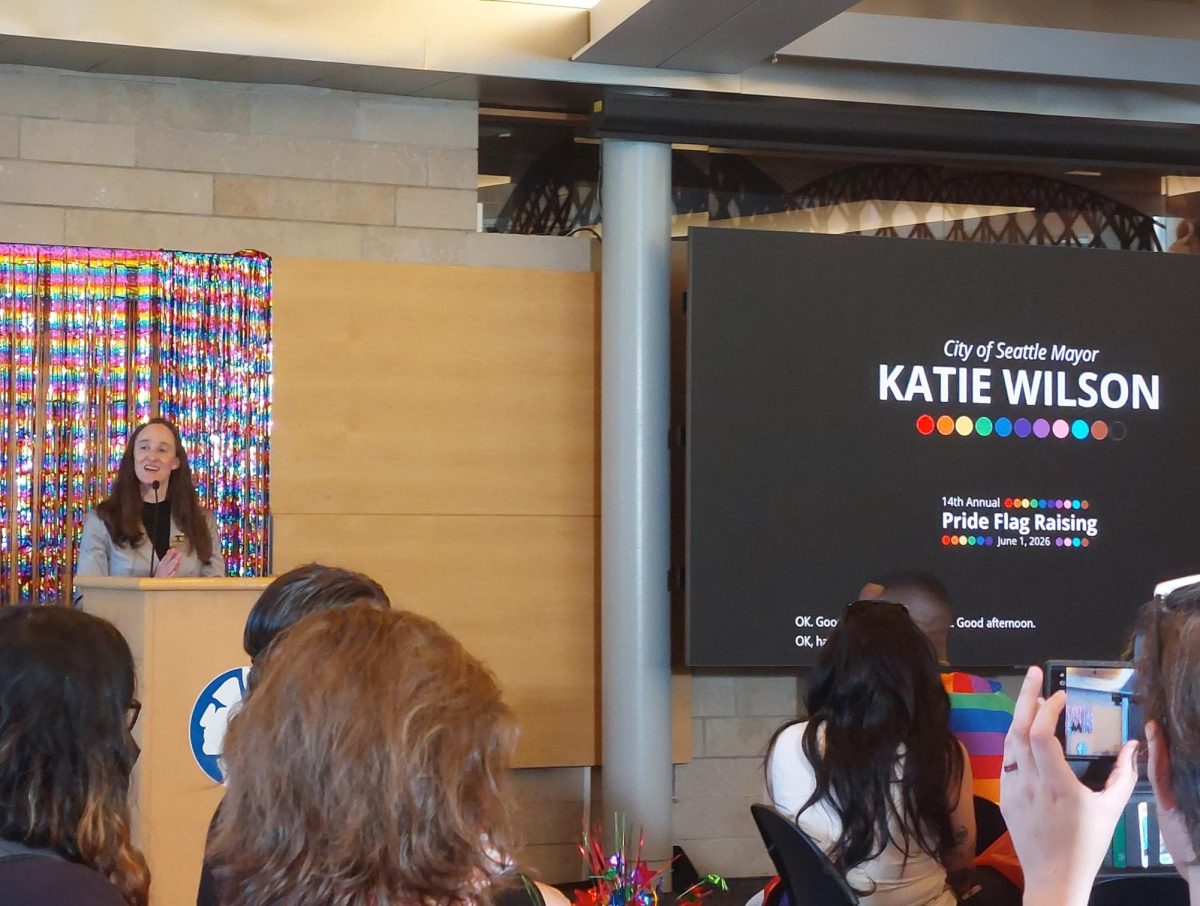


Seattle’s Bicycle Weekends Celebration Rides kicked off May 23, 2026, with Mayor Katie Wilson and over one hundred multi-modal commuters at Judkins Park Station.
The three-mile route along Lake Washington Boulevard from Mount Baker Park to Madrona Park to Seward Park will be exclusive to bicycles and pedestrians on selected weekends in May, June, July, August and September this year. A schedule was released by the Office of the Mayor, and states an access exception for residents, visitors and emergency and delivery services.
According to The Seattle Times, before the COVID-19 pandemic, a three-mile stretch on Lake Washington Boulevard between Mount Baker Beach Park and Seward Park was car-free for eight hours on selected days throughout the summer. The program was later expanded in 2020 with the official Bicycle Weekends starting in 2021, from July to October.
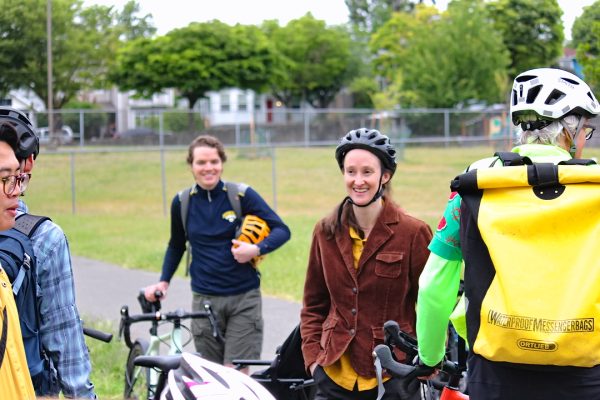
Past bicycle weekends raised safety concerns due to cars exceeding stipulated speed limits. This led to the creation of the Lake Washington Boulevard task force, which was saddled with investigating and recommending safety measures for the Boulevard. Terry Holme, Mount Rainier resident and an active volunteer for Seattle Parks and Recreation for 25 years, spoke about the recommendations of the task force, of which he was a member.
“There are a handful of ones that related directly to safety, for which there was a consensus, and one of those was that they recommended the city to install traffic calming methodologies, principally redesigning some intersections, and putting in a number of speed cushions, potentially hallway stops,” Holme said.
Clara Cantor, a community organizer for Seattle Streets Alliance and a member of the Lake Washington Boulevard task force, also spoke on some of the past safety concerns on the Boulevard.
“I used to bike along the Boulevard a fair amount. I get around by bike or by bus almost entirely, but since I had kids, I haven’t really biked on Lake Washington Boulevard anymore, because it feels really scary. There’s a lot of speeding and a lot of drivers, close-passing people and harassing people, and it’s scary to be on. For me personally, I’m thrilled with speed bumps and stop signs that have been going in,” Cantor said.
The Bicycle Weekend kickoff was not without pushback: around 20 protesters, some of whom were Lake Washington Boulevard residents and stakeholders, came to Wilson’s Madrona Park celebration with placards reading, “Don’t block community access,” “Too much closures,” and “No Queens,” amongst others, underscoring the divergent opinions on the closure of the Boulevard. This is despite the closures still providing access for specific travelers.
Holme, while a supporter of the closures, was not surprised that some residents were unhappy with the event.

“There are people that don’t like this, there are people who love it, and I am the first to acknowledge that this isn’t a unanimous consensus on how this should be done. It was no surprise to me that there was a reaction when the new schedule was put out,” Terry said
Mayor Wilson addressed the crowd at Madrona Park on the importance of the bicycle weekend and voiced hopes for them to continue so that Seattle’s parks and streets can feel like they belong to everyone.
“I am reminded today just how much love the community has for this and how much people value having time when they can move freely and feel comfortable. So, I want to encourage everyone to come out to as many weekends as you can. Let’s make sure that everyone around the city knows that this opportunity exists this year, and I am really looking forward to taking a bike ride with my daughter this afternoon,” Wilson said to the crowd.
Cantor echoed the mayor’s wishes for the direction of the bicycle weekends and shared hopes that the events could bring the neighborhood together.
“In my mind, there is no ‘us’ and ‘them’ here. We’re all neighbors, we all live down here, work down here, play down here. We all get around in different ways, different days of the week. Sometimes we’re in a car, sometimes we’re on a bus, sometimes we’re on a bike. It’s important for all of us to be able to get around safely, to have access to green space and to feel at home in our community,” Cantor said.