

In the heart of Seattle, where the city noise rarely fades, a quieter movement is taking root. Across neighborhoods, patches of green are transforming from overlooked spaces into centers of growth, learning and connection. Community gardens and urban farms are more than places to plant seeds, they’re spaces where students, educators and neighbors come together to nurture both the earth and each other.
More than just soil and seeds, these spaces are where hands meet the earth, where students meet their neighbors and where ideas about food justice and belonging take root.

Planting the Seeds of Connection
Among these spaces is Yes Farm, a thriving community garden run by the Black Farmers Collective. The Collective is a group of Black-led urban farmers, educators and community organizers dedicated to creating opportunities for BIPOC farmers, teaching sustainable growing practices and reconnecting communities to the land through education and access to fresh, local food.
Founded in 2016, Yes Farm’s mission goes beyond growing produce. Its goal is to address food insecurity in Seattle, a city where access to food is still unequal.
“I think there’s a bunch of people in the community who had a dream of feeding people nutrient-dense food because of the displacement and [other challenges the community has faced],” Tajani Ruffin, farm manager at Yes Farm said. “So if people are gonna pass through, it might as well be a place that they could be nourished on their way through as well.”
Ruffin describes Yes Farm’s work as both practical and deeply personal, saying its mission is to provide culturally relevant produce while creating a shared green space for the community.
Partnerships have been essential to that mission. Ruffin explained that organizations like Byrd Barr Place, one of the oldest anti-poverty organizations in Seattle, help extend Yes Farm’s reach by purchasing produce and distributing it to underserved communities for free.
“Any unserved community, I feel like we have these partnerships that really pour into us as an organization and pour into the community, so we’re all getting fed in a way that’s fair,” Ruffin said.
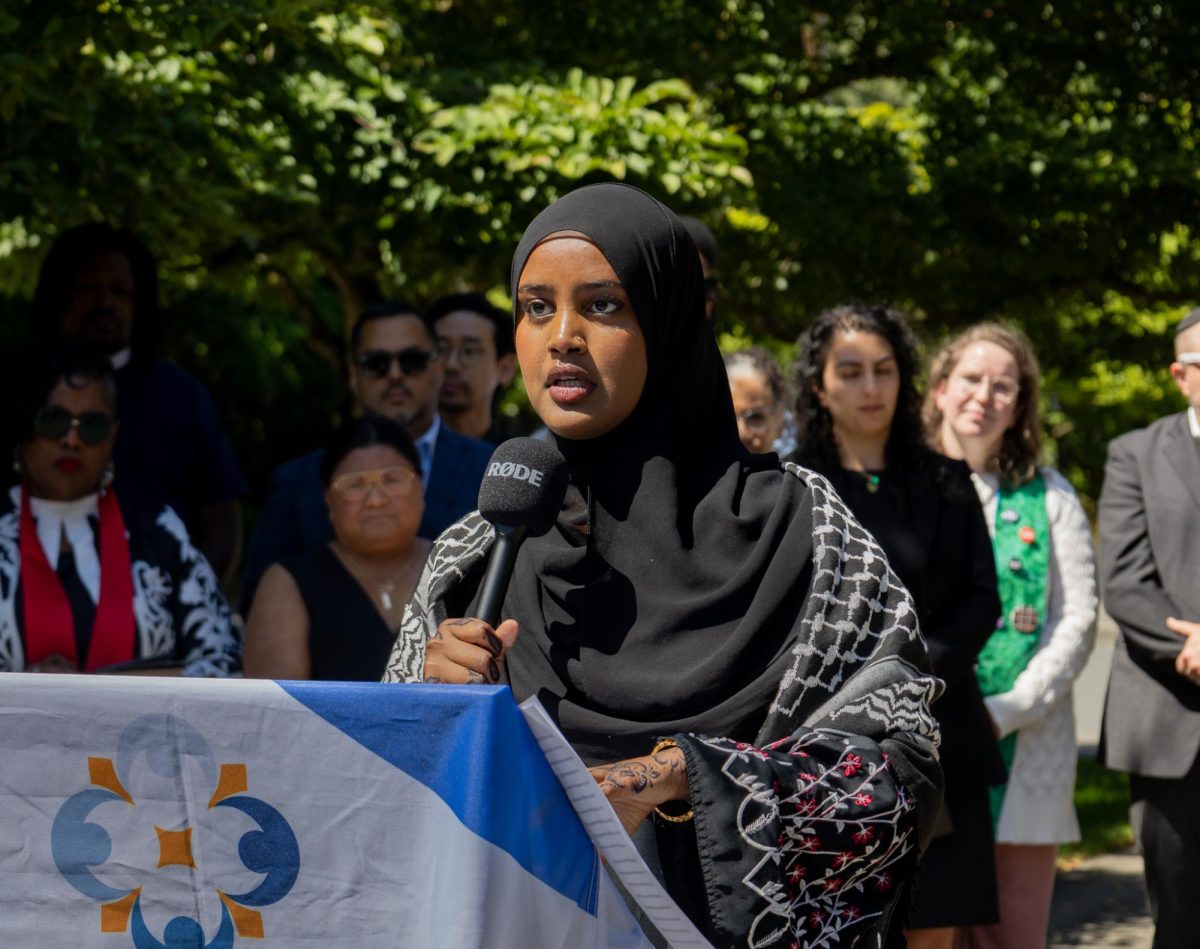
Brukab Sisay, a community educator with the Black Farmers Collective, highlights the farm’s role in building inclusive environments.
“I think the main thing is I want people to just feel joyful and connected to the earth, and return back to the healing that comes from connecting to the earth… just building community with other folks here,” Sisay said.
Partnerships like the one between Yes Farm and Byrd Barr Place help keep that legacy growing. Byrd Barr Place provides fresh food, housing support and energy assistance to local residents.
“We pride ourselves [on the fact] that everyone has a place here at Byrd Barr Place, especially in the food bank,” said Atiyeh Assaf, volunteer coordinator and market staff at the organization.
For Eric Severson, associate teaching professor of philosophy at Seattle U, the lessons at Byrd Barr Place and Yes Farm connect directly to what he teaches in his UCOR 2900 ethics class.
“All of my students are required to do community engagement learning within the context of the course,” he said. “ One of the options they can select is to come down and learn and work at Yes Farm.”
Students who choose to engage with Yes Farm for Severson’s class go down to the farm every Friday and volunteer with whatever projects are active on the grounds.
Severson says the experience helps students understand moral complexity in real-world settings. He explained that working on the farm helps students see how issues like food insecurity and environmental racism are intertwined, and that the challenges they study in class become more real and nuanced when experienced firsthand.
“I think community gardening in places like Yes Farm put ethics into practice and also they transform the way we think about ethical relations, because we’re in relationship with one another and with neighbors, as we think about and exercise the important ethical thinking that we’re doing as well,” Severson said.
 Student Roots: The Rise of Farm Club
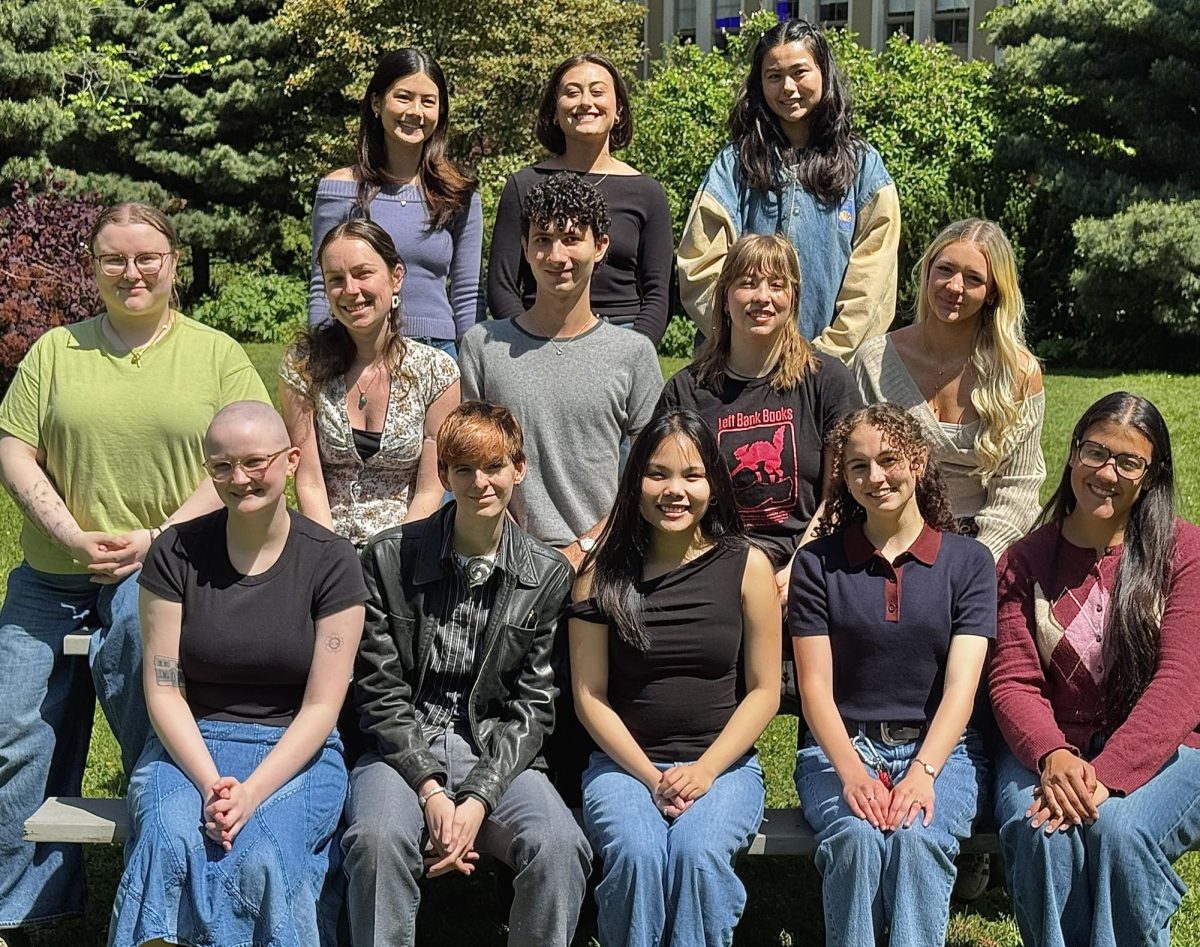
On the other side of campus, a new student organization has begun to sprout with the same passion for growing and giving. Farm Club, founded by Mira Martin, a fourth-year civil and environmental engineering major, and Eliza Blythe, a fourth-year environmental studies major, began just weeks before the fall quarter started, but has already become a space for students eager to get their hands dirty.
“I found so much solace in gardening and farming, and I thought that it was an under-accessible thing to students on campus,” Martin said. “I didn’t know any resources where people were regularly farming or gardening. So I just wanted to make a group where we could go to places that I had found.”
The club’s mission is simple: to bring students together through service, sustainability and shared purpose. Martin explained that the club welcomes anyone interested in gardening, requires no experience and hopes to create social events like greenhouse parties, seed swaps and cooking nights using food they grow themselves.
Brenda Bourns, a professor in the Biology department, advises Farm Club and teaches sustainable agriculture. Martin explained that Bourns has collaborated with Yes Farm and the Black Farmers Collective, bringing students to volunteer there as part of a UCOR she teaches called “Sustainable Agriculture.” She said having Bourns as their faculty advisor helps strengthen and maintain that partnership.
Through these collaborations, Farm Club members are discovering even more urban farming opportunities across the city. Martin mentioned Marra Farm, a local nonprofit that donates all of its produce to South Park’s food pantry—this past summer, Farm Club worked with them and donated around 850 pounds of produce each week.
Professors from the University of Washington (UW) also offered to share native plants for the Farm Club to grow with access to UW’s botanical gardens. Other local farms, like Beacon Hill and Danny Woo Gardens, are also part of Farm Club’s growing list of connections.
Even as winter approaches, Farm Club is preparing to keep the growing season alive.
“We’re gonna be growing leafy greens like kale, chard, spinach and garlic in the ground,” Martin said. “We’re growing basil and a bunch of things all in the greenhouse, which will be super fun.”
Beyond the produce, both Ruffin and Martin emphasized the community that blossoms from these shared spaces.
“I hope they feel the true connection with themselves and the people that are on this land and the people that came before us,” Ruffin said. “It translates into taking care of your community and yourself… I hope they feel like a place where they can belong, a place where they can breathe, and just take a pause from this really fast life.”
Mira echoed that same sense of belonging and purpose. She hopes that the club will bring together students who care about sustainability, providing a space where they can easily find volunteer opportunities and connect with like-minded people. Martin also hopes to increase awareness about Seattle U’s existing food resources, such as the on-campus food pantry, and highlight that the free, accessible pantry is stocked with produce from the Edible Campus program.
For her, the goal is not just to start something, but to make it last. Mira said she hopes the club will leave a lasting impact, something future students can keep building on year after year.

Seeds for the Future
At Yes Farm, Ruffin says one of her favorite parts of the job is watching people grow alongside the plants. She recalled a young volunteer who often brought her siblings, reminiscing on how rewarding it was to see them feel connected and supported as they flourished. This familial connection wasn’t just a coincidence—Ruffin feels that urban farming connects people across creed and generation.
“The elders that come through, all of them are my aunties,” Ruffin said. “They all give me a big old hug… they just carry so much knowledge.”
Sisay also emphasized that the farm serves as a “third space” in the community, a welcoming environment where people can connect, be themselves, and find joy in the collective work of growing and giving back.
As more students, educators, and community members dig their hands into the same soil, the roots of connection grow deeper. The partnership between Seattle U and Yes Farm, and engagement between Farm Club and local farming communities, both cultivate shared learning and nurture new connections to both people and soil.