
Some students were convinced last week that Immigration and Customs Enforcement (ICE) was on Seattle University campus. A few took to social media to warn others about the potential threat posed by agents near or on campus. Others texted their close friends, but ICE’s presence was never confirmed.
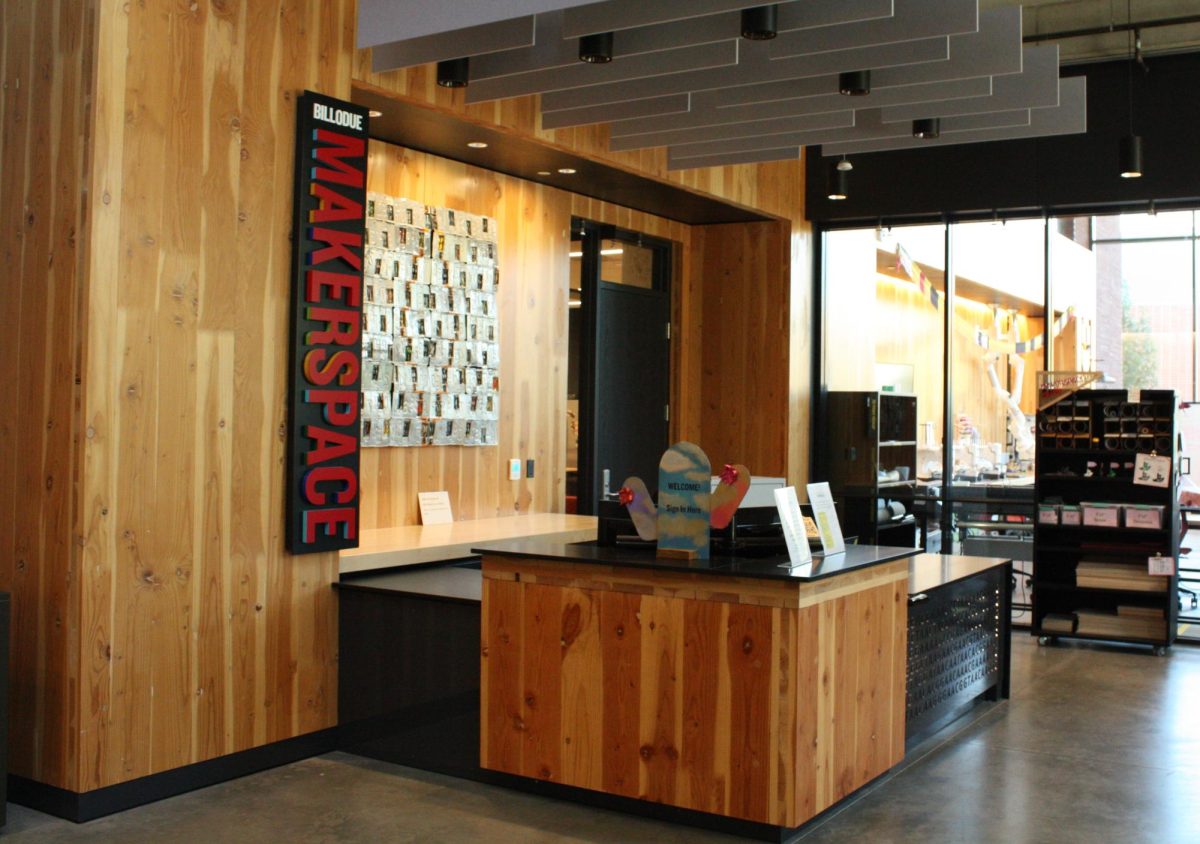
This appears to have begun when an individual identifying themselves as part of the Department of Defense (recently renamed the Department of War), approached the Billodue Makerspace front desk once during the week of Jan. 12, and again during the week of Jan. 19, asking for information about a student.
According to a source who spends time at the Makerspace, who spoke on the condition of anonymity, the individual was an older white woman with blonde shoulder-length hair, wearing a grey jacket, who asked about specific individuals whom no one at the Makerspace had heard of. The woman said it was possible that the individuals in question no longer attended Seattle U, and that the questions were related to “security clearance.”
The incident was shared with Makerspace staff in an email, sent Jan. 22 by Rachel Segrest, Makerspace specialist. The email was obtained by The Spectator from a professor who got the email forwarded to them from an unknown source.
“On 2 recent occasions, persons from the ‘Department of Defense’ approached our Front Desk claiming to seek information on some students. I want to let you know what to do in case any law enforcement or ICE agents ever approach you at the front desk with questions,” the email reads.
The rest of the message details that Seattle U does not voluntarily share student information with any law enforcement officials under the Family Educational Rights Privacy Act (FERPA) guidelines, and that agents are not allowed to enter non-public spaces such as residence halls, apartment rooms, classrooms or faculty offices. The Makerspace is a space that agents cannot enter without a search or arrest warrant.
In an email to The Spectator sent Wednesday afternoon, Randy Merced, executive director of Public Safety & Emergency Management, acknowledged meeting with a DoD contractor who had visited the Makerspace front desk on Jan. 13. That visitor was not a law enforcement agent, he said, and was there to do an authorized background employment check on behalf of a federal agency.
“These checks are a standard part of the application process for many federal government positions, such as those that require a security clearance, and occur only after an applicant provides their consent, which I verified. I wish the individual conducting the screening had contacted me directly instead of showing up unannounced at the Makerspace, which caused a lot of unnecessary confusion. I shared that feedback and am hopeful it won’t happen again,” Merced wrote in an email to The Spectator.
Merced was not immediately available for follow-up questions about his email.
His account only refers to a singular instance on Jan. 13, and used the pronoun “he” to refer to the individual. The anonymous Makerspace source described two visits, both by the blonde woman.
Rumors about the incident spread among the student body, with multiple students alleging on social media that ICE has been or will be present on campus or in the Makerspace. The person’s intent on campus and whether they were from the Department of Defense are unknown. Nick Ames, manager of the Makerspace, told The Spectator that there’s no evidence of any immigration-related visits to the Makerspace, but provided no further confirmation of the events.
However, ICE is allowed to use ‘ruses,’ or lies, when conducting immigration enforcement operations to gain permission to spaces without judicial warrants, according to the Immigrant Defense Project, a New York-based nonprofit that advocates for the rights of immigrants.
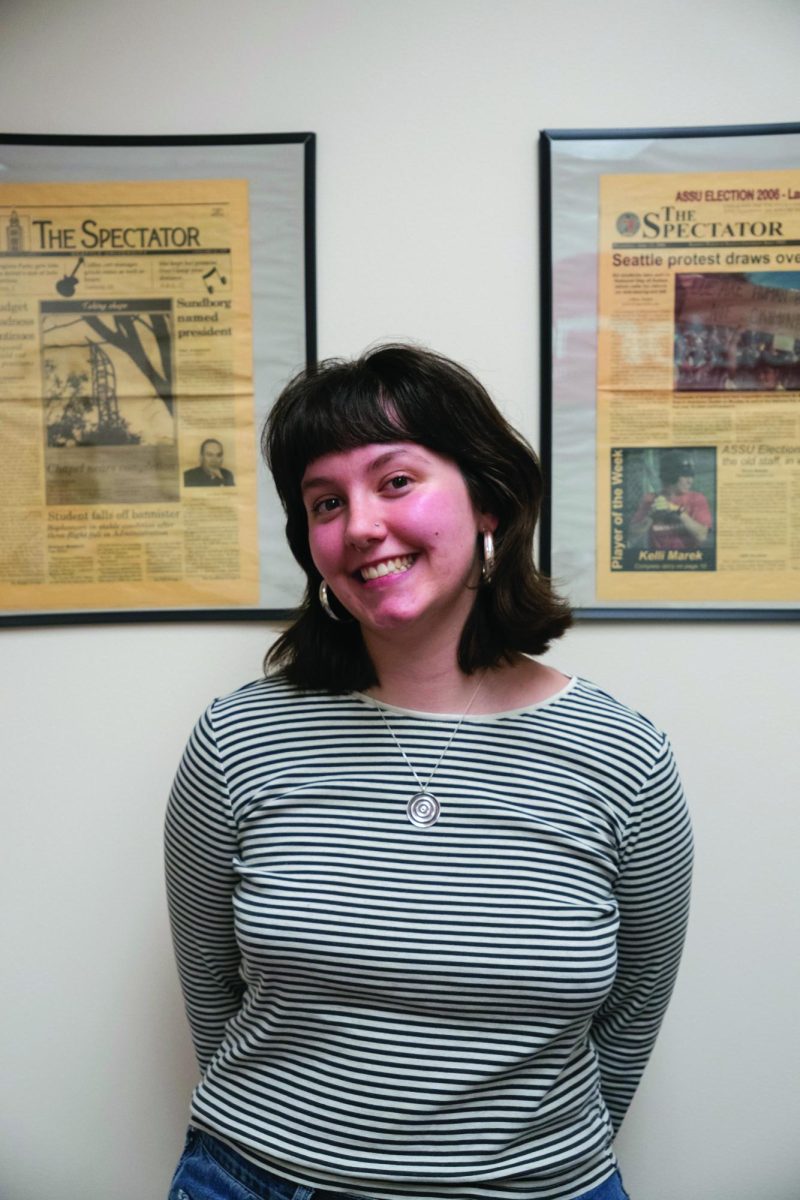
Fiona McGilly, a third-year sociology major at Seattle U and a Makerspace employee, was not present when the events occurred, but has spoken with other staff members who were present when the person approached the front desk. Based on information from coworkers, McGilly said the front desk staff during the incident redirected the individual to public safety. Makerspace staff members present at the time of the event were contacted by The Spectator for comment, but neither responded.
“To me, it’s very weird that if the federal government needed to contact students, they would come in person, and walk on campus, and look for a desk and talk to a student worker,” McGilly said.
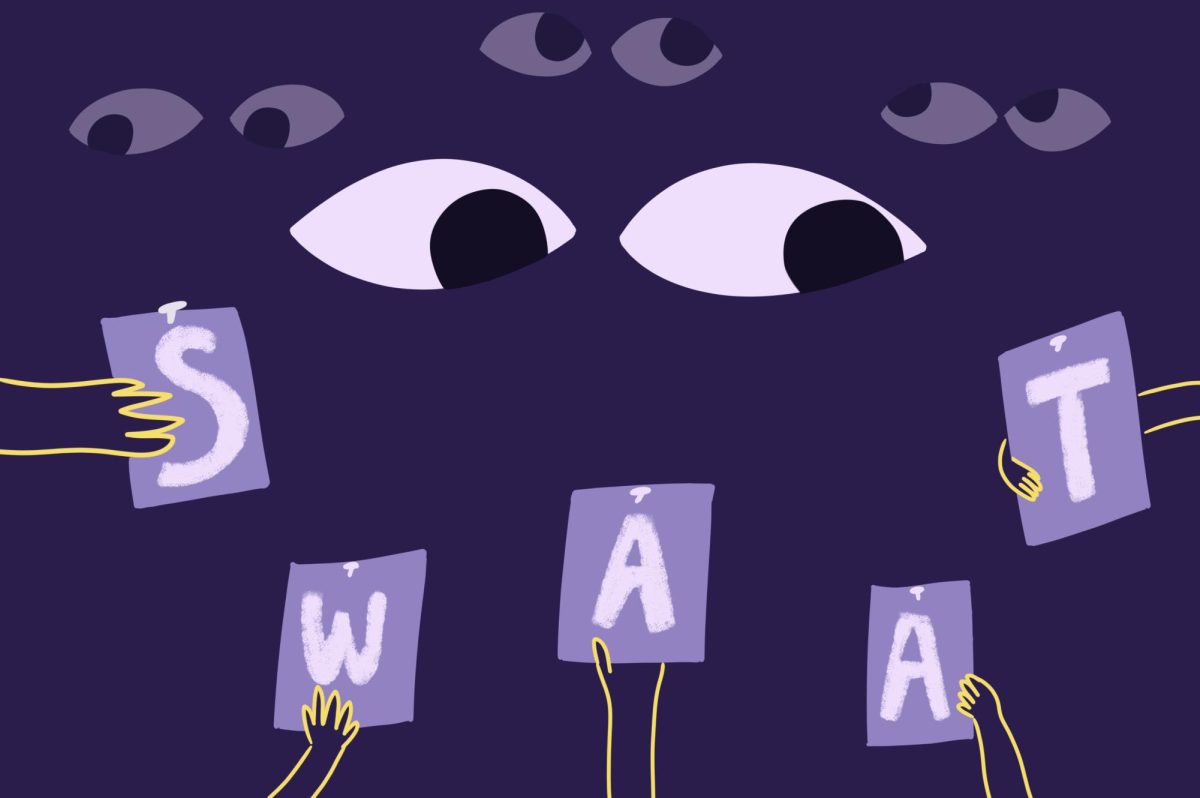
McGilly, along with other members of a new campus club, Students Working Against Authoritarianism Together, distributed red cards across several campus buildings on Jan. 22 in response to the incidents at the Makerspace, with a list of statements asserting constitutional rights.
“I do not wish to speak with you, answer your questions, or sign or hand you any documents based on my 5th Amendment under the United States Constitution,” the cards read, along with other similar statements against being searched or having one’s home entered without a warrant.
The cards include the statements in English and Spanish, the numbers for Seattle U’s DPS and University Council and a demand for an official ICE alert system from the university.
The university’s webpage titled “Guidance on Federal Executive Actions” was last updated on Jan. 22, to state that Seattle U will not automatically issue an alert through its SeattleUAlert emergency notification system in the case of federal presence on campus.
The university webpage explains that the policy is “because federal law enforcement, including Immigration and Customs Enforcement (ICE) or Customs and Border Protection (CBP), could be present on campus for a range of activities that are not emergencies and do not pose a serious or ongoing threat.”
Instead, an alert will be sent if DPS determines that ICE or CPB activity constitutes a serious or ongoing threat, and they will evaluate their presence on a case-by-case basis. This decision sparked backlash from some students on social media who believe that any presence of these agencies on campus constitutes a threat.
A year ago, the Trump administration rescinded previous designations of universities as sensitive or protected locations where ICE action is severely limited. A campus-wide email shared by President Eduardo Penalver last January in response to this change explained that while ICE needs a warrant to access non-public areas of campus, they can access public areas such as the upper and lower malls, lobbies and hallways of buildings, the quad and the university green without a warrant.
The email included guidance for faculty and staff, suggesting they ask ICE officers to wait before entering any non-public areas until they have contacted the Office of University Council or public safety’s 24-hour non-emergency line. Faculty and staff are not required to allow ICE agents into non-public spaces without a warrant, and, according to the email, should not accept being served a warrant or subpoena; instead, they should refer the officer to the Office of the University Council.
The events at the Makerspace come as the two killings in Minneapolis and the increasing number of ICE actions nationwide have sparked fear in cities across the country, including Seattle. Last week, four schools in Seattle locked down in reaction to social media posts alleging ICE agents were present near campuses. According to The Seattle Times, this lockdown turned out to be a false alarm.
According to information from the Deportation Data Project, arrests by ICE in Washington state increased by 143% during the first year of Trump’s second term, and deportations out of Washington nearly tripled. While social media allegations of ICE presence can garner undue panic, there is ample reason for concern.
This story is still developing.