

The Spectator was given the opportunity to sit down with Redmond City Council Candidate Vivek Prakriya for a conversation ahead of his guest lecture on youth voter engagement that he will be sharing in a course for Professor of Economics Meenakshi Rishi at Seattle University Nov. 6. Prakriya will be running against incumbent Steve Fields in the Nov. 4 election. Initials have been used to indicate the speaker.
TS: Who are you?
VP: My name is Vivek Prakriya. I’m currently a student at [the University of Washington (UW)], and I’m running for Redmond City Council for position two. It’s been quite a ride, but the general election is coming up November 4th. So, right now, what I’m doing is just working very hard for that.
TS: What prompted you to run for City Council?
VP: I’ve been involved in politics and public policy for maybe four or five years. I started off during the 2020 election cycle, just because I felt like there was a lot going wrong with our country, and I had to do something. So, I went to my local member of Congress, Susan Delbene. I went to her website, [and] I clicked the ‘volunteer’ button. That was my first introduction ever to politics.
I started going to council meetings back in August. I was just curious, what does [the] council actually do on a week-to-week basis? It’s not like it is here in Seattle, [where] I think a lot more people are familiar with their city council. [In Seattle] it’s a full-time job, more publicity. But in Redmond, you really only hear about the council when there’s something controversial. Most of the time, you just don’t hear anything.
So, I was curious, what do these guys actually do? I went pretty much every week for about six or seven months. I thought it was really interesting. I started reading every document I could get my hands on, the budget, the comprehensive plan, everything. I think it was April or May that I decided to run.
TS: You’re currently a triple major at UW in computer science, physics, and math. Those are not what a lot of people would expect someone going into politics to be focused on. How do you think this impacts your experience?
VP: I think there are pros and cons. I think that I would bring a different perspective to the council in Redmond that hasn’t been there. Redmond is one of the tech capitals of the world. I think that Redmond could benefit from having someone with that technical perspective on [the] council to really look at tech things that are getting rubber-stamped right now. [I could] have a more critical lens, maybe draw on some tech solutions to problems that we have, like accessibility with human services.
I also think it’s a drawback in some cases because you may get too focused on the numbers, you get too narrow-minded on certain issues, and you miss the larger picture that maybe someone with a humanities background would offer. That’s why I think it’s important to have a mix on council. But right now, if there’s nobody bringing that technical perspective, I want to be there to present that lens.
TS: What do you think are some of the most pressing issues for voters in this upcoming election?
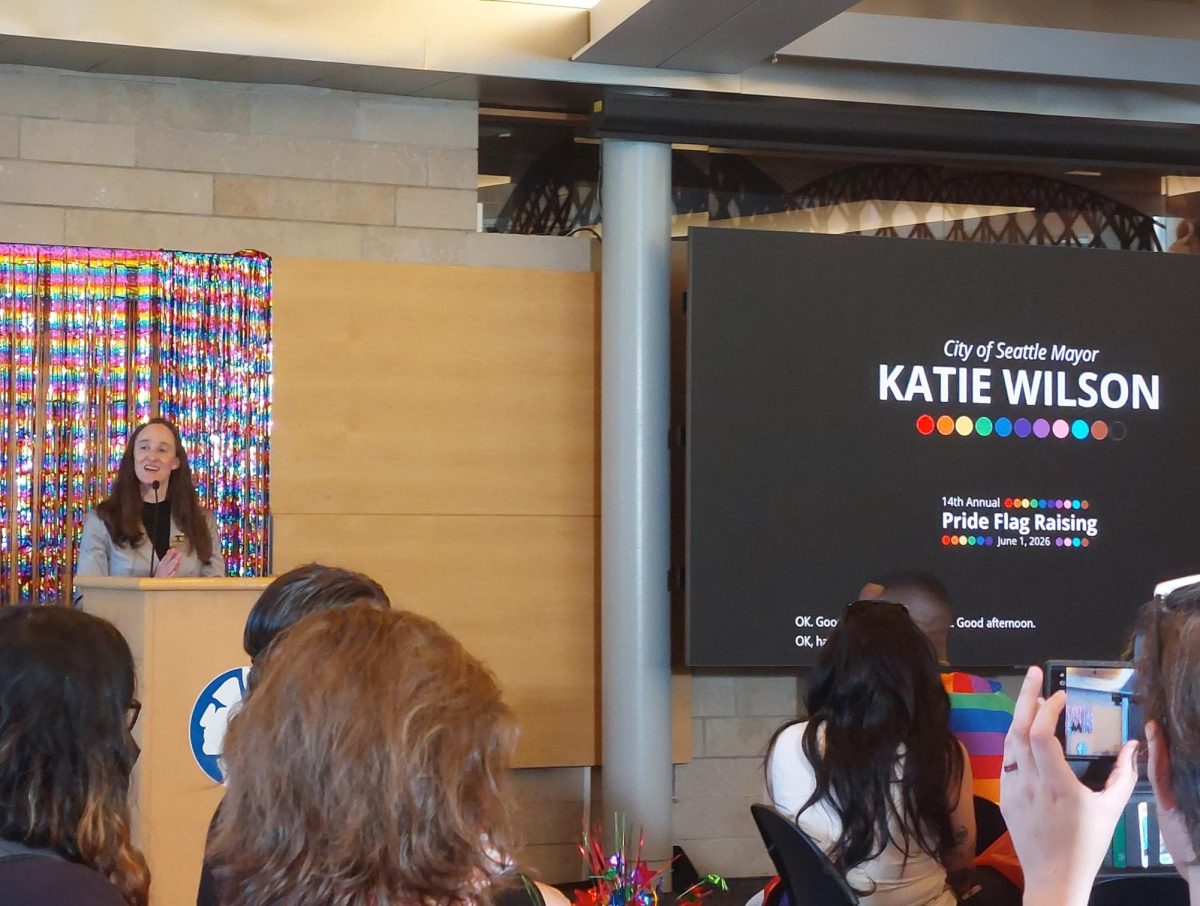
VP: I think all around the country, the most pressing issue right now is affordability. I mean, I think we’re seeing that in New York City with Zohran Mamdani. I think we’re seeing that in Seattle with Katie Wilson. Even in Redmond, this is a huge issue. This is one everybody can empathize with, because even long-time homeowners in Redmond, their kids are not able to even see a path towards an equity ownership stake in the city.
TS: You’ve had some experience developing generative AI. That’s a bit of a hot topic right now. What would you say to someone who agrees with your policies, but is unsure about how they feel about AI?
VP: It’s 100 percent a fair concern. I think that in the public sector, you cannot operate with the Facebook-style ‘move fast and break things’ mentality. You should not break things in the public sector. I think that AI is a tool like anything else. I think that it has really, really great potential for a city like Redmond.
Redmond has some modest tenant protection laws on the books. But people still get evicted just because they don’t know about these laws. My dream is that someone could go to Redmond.gov, upload the contract they signed, and then type, in their native language, the situation they’re facing. See if what is happening to them is even legal, and if it’s not, what recourse do they have? With regards to wrongful eviction, I think that that is like a perfect use case of AI.
But, you know, we want to make sure that AI is not spitting out wrong answers. We want to rigorously test these things. So we have to be very, very cautious. I want to make sure that these are ideas even being discussed, even being proposed. Very few people have really done this in the government sector, even though these have been out for a couple years now. We have to be very cautious, but I am cautiously optimistic.
TS: If elected, you would be the youngest person of color to hold office in the state of Washington. How does that feel?
VP: I think that that’s great, although, I don’t think it really means anything unless you accomplish what you’re setting out to do. I never went into this thinking, ‘Oh yeah, I’m going to be the youngest.’ I just thought, ‘You know, I have a few really cool ideas I want to implement in the city.’ What I realized throughout the course of the campaign is that, you know, running a campaign is hard, especially if you’re running against an incumbent. If you don’t have some inner, true belief in the purpose and value of what you’re doing, you’re not going to make it very far. Sure, if I win, it would be really cool to have people call me ‘council member.’ But that alone is not going to cut it. You’re not going to get very far if that’s your only motivation.
TS: Do you think that your age has had an impact on how you approach this campaign compared to some of the other folks running?
VP: I knocked on a door the other day and [the woman who answered] said, ‘Oh, my son at Redmond High School and all his friends are following your campaign.’ I assume they’re not doing that with every city council [candidate]. So that part is cool.
I’ve always kind of done things young. You know, I entered college after middle school. I was a TA in the computer science department at UW when I was 15 or 16. I was often teaching kids who were five years older than me. I helped start a company that’s now valued at over $25 million before I turned 20. And yeah, I won my primary before I turned 20. So I’ve done things a little bit young. Throughout my whole life, I’ve been very, very privileged to be able to really pursue my passions without worrying about where my next meal is coming from. So I don’t really think about [my age] that much.
TS: What are some of the challenges and learning experiences that have come with running a campaign for the first time?
VP: There’s a lot. My right hand is borderline numb right now because I wrote, like, 250 handwritten postcards yesterday. It’s a lot more work than you expect. The summer was particularly brutal. You don’t think about how much you’re going to doorknock when you’re starting off the campaign. There were days I would go out on the weekends and I would literally just run from house to house for nine hours. I’m not even kidding.
TS: What has been the highlight of your campaign so far?
VP: Running between doors, I would say. I mean, I always wondered why don’t politicians run from door to door? You can hit so many more doors. During the primary, I was very obsessed with this race. I was running from door to door.
After the primary, I got a little bit complacent. I stopped running. I was walking. But now, that desperate pressure is starting to sink back inside, and I’m back to running.
TS: People often focus on the larger titles like mayor or president during election season. What do you think are the benefits of paying attention to more downballot positions like city council?
VP: Your roads —we work on them. Your sewage, your garbage. All the day-to-day things that you don’t think about, they’re done by the city council. Police, fire department, your water bills, all of these things. I think that more now than ever city races are important because there’s so much distrust at every level in government. Local government should be held high as this is our people, these are the guys we trust. I think the benefit of focusing on local government right now is that you actually feel like you have the power to make change. Maybe you don’t feel like you can do anything about your national government, but you can really make an impact on your own just by volunteering in the local city council.
TS: What advice do you have for younger people who may be interested in getting involved in politics but are unsure where to start?
VP: It’s overwhelming. I think you need an in. I’ll tell you, at the beginning of this race, I didn’t realize how hard it was to get endorsements. Who wants to endorse a 19-year-old? But I had an in. I had worked in politics for years, so I built up some relationships. I was able to go to some people who I knew very well, one state senator in particular, and be like, ‘Hi, I’m running. Can you please, please endorse me?’ You know, if she had said no then this entire campaign may have been cooked.
Go to any local politician and click the volunteer button. It doesn’t matter what you do, sign, wave, knock [on] doors. It can be anything, but you’ll inevitably make more connections from it.