

In six weeks’ time, Seattle residents will gather at the polls and vote for their next mayor. After months of campaigning and an Aug. 5 primary, the leading candidates are Labor Organizer Katie Wilson and incumbent Seattle mayor Bruce Harrell.
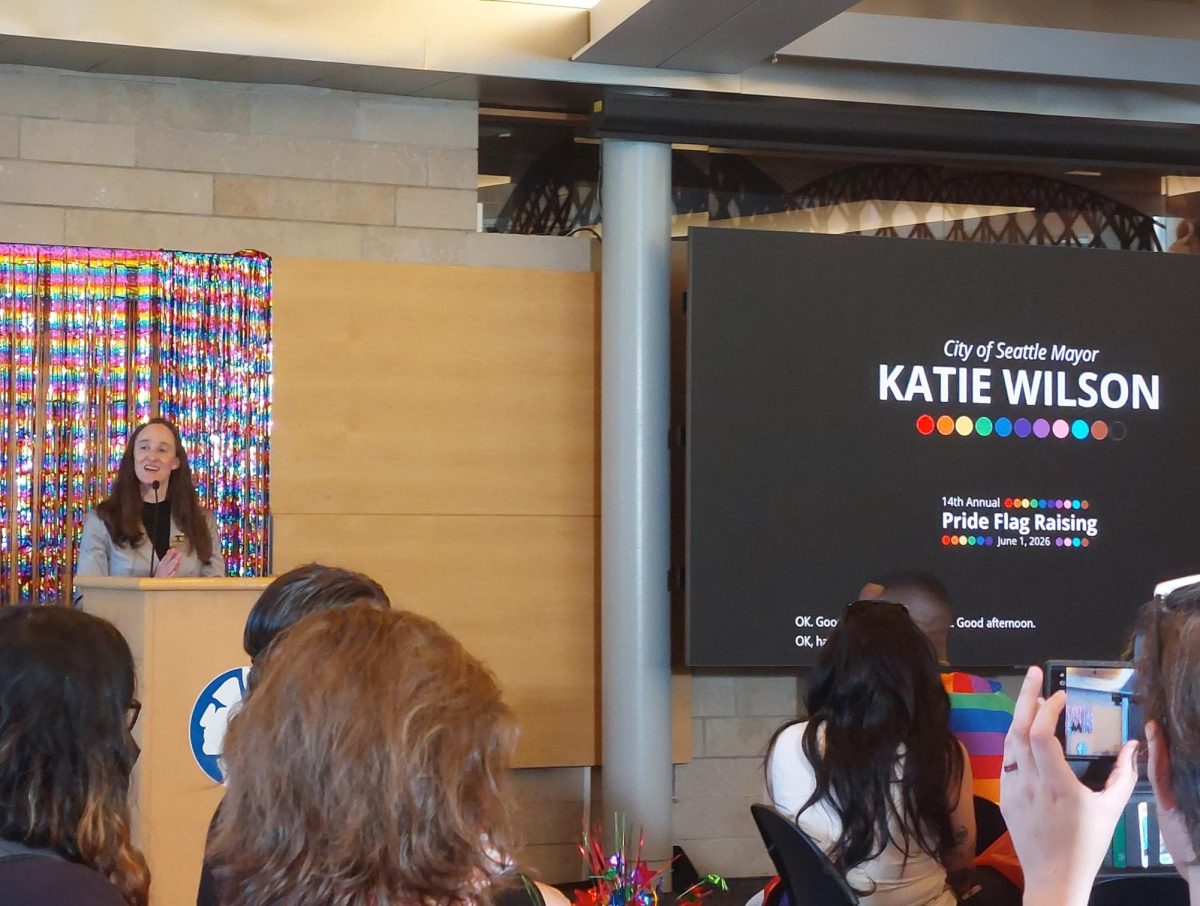
Katie Wilson, who received 50.8% of the vote in the primary, is the co-founder of the Seattle Transit Riders Union and has a history of activism and organizing. She is a left-leaning candidate whose platform is centered around progressive policies for homelessness, affordable housing, public safety and transportation
Bruce Harrell is the current mayor of Seattle and the incumbent in this election. He left the primary with 41.2% of the vote, which was a disappointing result for the candidate. Though still left-leaning, he is the moderate in this election, and his platform cites public safety, homelessness and transportation as top issues.
According to Associate Professor of Political Science Patrick Schoettmer, the race in many ways boils down to whether voters are satisfied with current establishment politicians or are seeking a new path forward with someone who is outside of the mainstream.
“When you’re having an incumbent election, it’s a hire-fire decision… All Wilson has to do is be an acceptable alternative. Everything else, the pressure is on Harrell to convince people that he’s worth rehiring,” Schoettmer said.
Harrell has faced pushback for supporting Prop 1B, a proposition that would repurpose existing tax dollars for social housing instead of introducing a new tax on highly paid employees to fund the housing. Detractors criticized him for siding with corporations and failing to act in accordance with his stated affordable housing goals. Additionally, despite his focus on public safety, Harrell also faces criticism for not making significant progress on crime and homelessness.
Wilson has found success in contrasting Harrell’s shortcomings and criticisms of the state of Seattle by proposing bold plans for tackling issues. These include reallocating significant police funds to mental health and addiction resources and creating 4,000 emergency shelter beds over a four-year period.
Because of her populist platform and an increasing mainstream acceptance of socialism, Schoettmer revived an old American political term to describe Wilson: a “sewer socialist.”
“That is a socialist that’s focused on meat and potatoes issues like service delivery and quality of life improvement rather than broader foreign policy or identitarian issues,” Schoettmer said.
Criticisms of Wilson’s campaign often center around her inexperience in electoral politics. In mayoral debates, Harrell has consistently pressed Wilson on specific costs for policies and on her unproven track record, echoing concerns that her policies may be expensive and unfeasible and that she lacks the large-scale organizational experience to manage Seattle’s large staff and budget.
This race fits into a paradigm that Seattle voters are quite used to, where an establishment moderate runs against a disruptive progressive. Younger voters often favor the progressive candidate, while older Seattle residents tend to support the moderate. This split is similar to partisan divides nationally, but skewed to the left in a city as blue as Seattle.
“I often like to say there’s no Democratic party and no Republican party, but in Seattle politics, there is the Seattle Times party and the Stranger party,” Schoettmer said.
Some Seattle University students voiced support for Wilson and her working-class campaign. For some students, like Caroline Heege, a second-year history and Spanish major, a dislike for Harrell and close attention to Wilson’s policies have made them staunch Wilson supporters.
“I’ve grown up in Seattle, so I’ve seen the evolution of the worsening housing crisis, as well as the mental health crisis in the city. I disagree with [Harrell’s] strategy for addressing that,” Heege said. “[Katie Wilson] appears to be much more receptive to the needs of working people as opposed to large corporations that do business in our city. I think that there’s a lot more potential there to help people and help with affordable housing.”
However, not all students are Seattle residents who are eligible to vote in the next election. For some, like Lila Clausen, a third-year English and psychology major and California resident, support for Wilson is less based on policy and more aimed towards supporting a push for progressive and action-based policies locally and nationwide.
“I care, but I don’t know much more than the candidates and general tone of it being a moderate versus progressive election. I know some of the prominent issues are around homelessness and housing policies… I forget if it was the Burner or Seattle Times that drew a comparison to Mamdani vs. Cuomo in New York City, but that’s basically how this whole election has been framed in my mind,” Clausen shared in a message to the Spectator.
The candidates will be hosting a debate at Seattle U in the Pigott Auditorium at 7:00 pm on October 8th, which students can register for on the Seattle U Newsroom website.
As both Wilson and Harrell will continue campaigning hard to sway voters in the final count, Seattle voters will collectively bet on a future marked by either establishment moderate leadership or an unproven, but hopeful, progressive changemaker.