

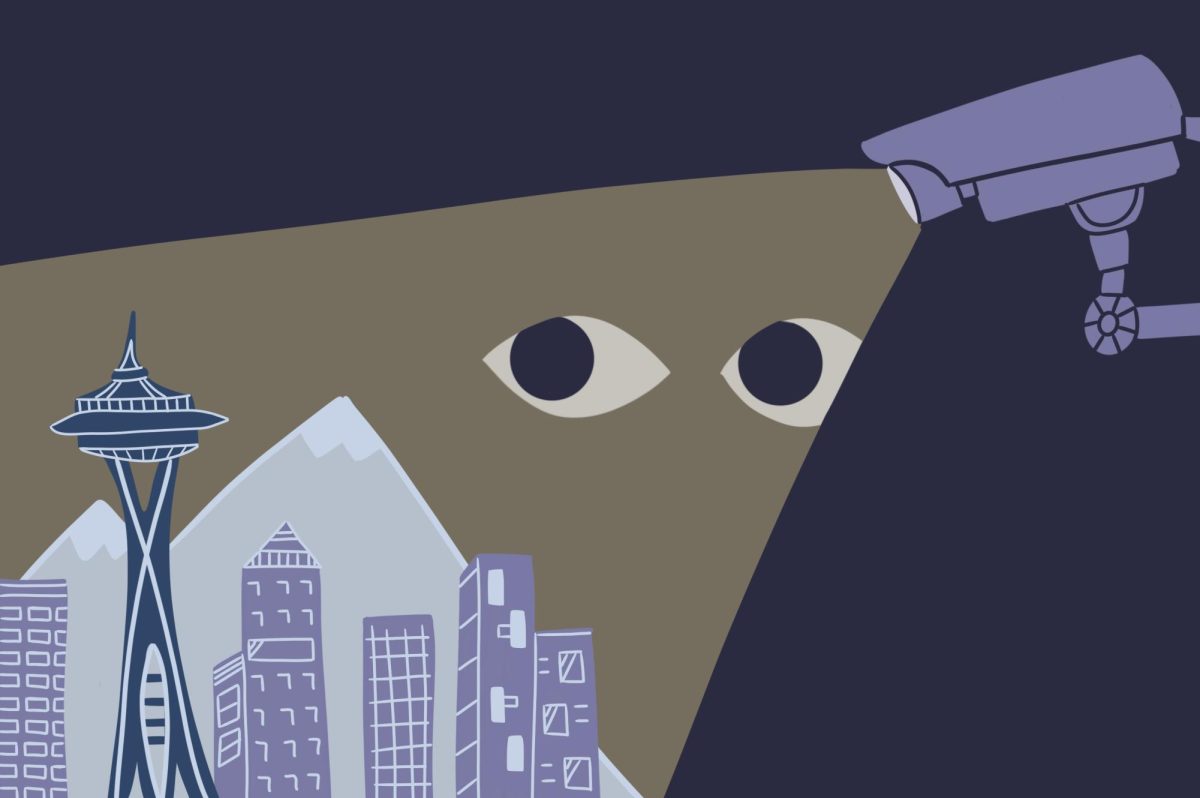
In the current legislative cycle, state Democrats have raised concerns over Flock safety cameras. These are cameras that aid in the tracking of vehicles, using artificial intelligence to store information that can be used for vehicle identification. Flock Safety’s website boasts that its cameras can be used to locate and track a vehicle with just a description of the vehicle in “plain language.” Additionally, Flock Safety centralizes data in a nationwide database.
There have been concerns raised about Immigration and Customs Enforcement (ICE) and other federal organizations using these camera—which are intended for local law enforcement—to assist with a federal campaign of deportations. The ability of federal agents to access the footage of these cameras was brought into sharp focus in Washington state when a judge on the Skagit County Superior Court ruled in November of 2025 that Flock camera records would be accessible as public records.
SB 6002 is a bill currently in the Washington state legislature that seeks to restrict access to these cameras to people outside of police agencies, except for those with a judicial warrant. SB 6002 also exempts this data from public records so long as it contains individually identifiable information on the recording. There are additional provisions to limit the retention period for the data that these cameras collect. SB 6002 just passed the Senate and is now awaiting consideration in the House.
Critics say that this technology is something the autocratic states of George Orwell’s 1984 would be greatly envious of. There is a serious threat not only to our capacity for privacy and personal agency, but also to our safety and security. Given how the Trump administration has been using its political power to encroach on constitutional rights, this new ability to track individuals poses only additional danger to people trying to criticize the current administration.
ICE has already been shown to use AI recognition tools to identify anti-ICE protestors. This poses a significant risk to everyone, as the enforcement action in Minneapolis demonstrates that ICE is willing to violate local and federal law.
There are also concerns about the potential for non-governmental harm. Tools like this, especially if they are publicly accessible, would give potential stalkers or human traffickers another way to control people. This should alone be enough to justify strict regulation, if not an outright ban on this technology.
Being able to track someone’s only mode of transit would give potential criminals tools to understand someone’s daily routine at almost no cost or risk. This sort of tracking is ripe for abuse by people who want to control or dominate others and shouldn’t be at the public’s disposal.
There are significant vulnerabilities in the Flock Safety camera, as shown by Ben Jordan in his YouTube expose, “We Hacked Flock Safety Cameras in under 30 Seconds,” showing how easy it is to bypass Flock Safety security measures. The potential harm of just having these in place in their current form cannot be understated.
There are some reasonable cases for this kind of technology, as it could greatly expedite the ways in which genuinely harmful crimes are detected. There is potential good that could be done, given that it is being used in good faith by those who have access. The potential for this to crack down on criminal networks is immense.
However, this still necessitates restrictions on who can access footage from the cameras. This also does not take into account the concerns of segments of the population who feel legitimate distrust of law enforcement and the potential misuse of this data, even within legitimate spheres.
This bill represents the possibility for regulations that could cut down on most of the ways that harm can be done as a result of this technology.
While SB 6002 represents a move towards regulation, it still falls short in key areas. The bill provides no avenue of response if the cameras provide false information, as AI has been known to do. This, combined with the possibility of criminal elements or federal organizations finding that being charged with a gross misdemeanor is worth the high level of information that this technology provides, leaves the bill as nothing more than a feckless piece of legislation that does little but serve to lower discontent with the new security measure.