
Every spring quarter, Student Government of Seattle University (SGSU) hosts elections for its executive board. Candidates campaign to become a part of the executive board, which represents the student body along with the representative assembly of demographic-specific senators.
With all that’s going on in springtime, it’s easy for some events to fly under the radar. One such event was the spring SGSU election, which had a turnout of just 127 voters–barely 2.5% of Seattle U’s undergraduate population. It was a small number of voters even in comparison to the fall 2025 election, which saw just 232.
Elections were held via ConnectSU April 28-30 for five executive member positions, including President and Senate Chair, and one senator position (Nursing senator). None of the six positions were contested, and several executive-level positions (including Vice President of Academic Affairs and a number of previously vacant senator positions) didn’t see a single candidate run.
“We didn’t have as much time to market [candidacy], to put it out there,” SGSU Elections Coordinator Said Malik Fazlitdinov said. “We did all the campaigning events and we had a lot of interest, but we couldn’t accommodate everyone, unfortunately, due to time constraints.”
According to Fazlitdinov, several would-be SGSU candidates also missed out on candidacy because they weren’t able to secure faculty letters of recommendation in time. Those candidates will have the opportunity to be appointed to positions via SGSU’s Midterm Appointment Process, which will take place throughout May of this year.
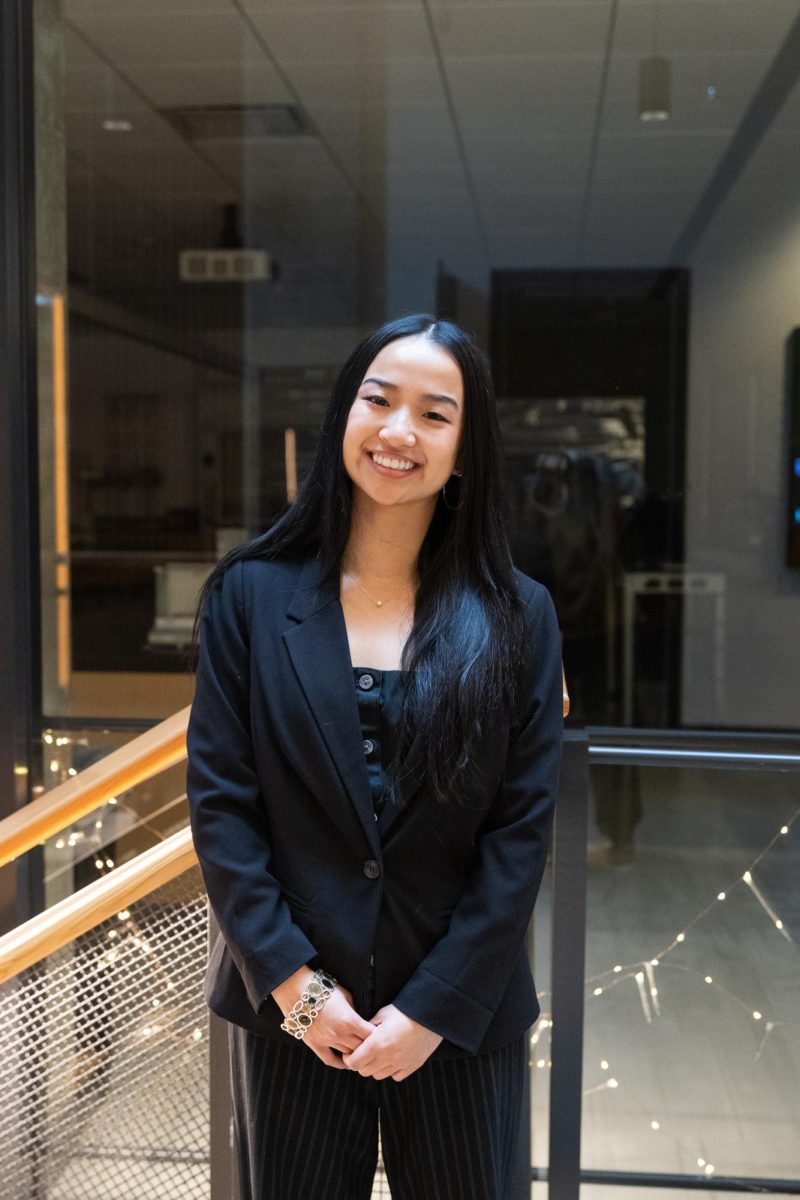
SGSU’s newly elected executive board, which comprises President Dana Nguyen, Senate Chair Delisha Doppa, CFO Cameron Chiao, Vice President of Communications Jennifer Kamau and Vice President of Diversity & Inclusion Sebastian Pong, is already making plans for the upcoming academic year.
“I foresee challenges with budgeting, integration and then internal restructure of SGSU. So, those are my three big goals to address,” Nguyen, a second-year cellular and molecular biology major and current SGSU senate chair, said. “What I want to offer for the students is transparency and compassion, giving them autonomy to find and listen and speak out about what they want. I can be the person to bridge their needs to administration.”
SGSU is the undergraduate population’s most direct link to administration. Executive members are able to speak with administrators more often than the average student, and members of the representative assembly (composed of senators) can vote on motions during weekly assembly meetings.
“I know there are a lot of student voices and student leaders already on campus, and I want them to feel like this is the space for them,” Nguyen said.
Until recently, student voices and leaders from Seattle U’s South Lake Union (SLU) campus have been somewhat absent from SGSU–though not for lack of trying. In 2025-26, Cornish College of the Arts at Seattle U’s student government organization, the Cornish Student Senate (CSS), saw its final academic year in the midst of the Cornish acquisition. As integration continues, some SLU students have felt the changes.
“It’s possible that there’s just not been enough time for us to get really connected with Seattle U,” Charlie Penck, a first-year art major at Cornish, said. “I like that they’re making an effort to include us, but I feel like it’ll take a while to see the real impact.”
A constitutional amendment approved in the latest SGSU election created two senator positions (an at-large and a Cornish College of the Arts position) for SLU campus students, but those seats remain vacant. According to Fazlitdinov, SLU campus students expressed interest in running but were unable to commit to candidacy during their finals period. SLU senators will be appointed over the summer.