
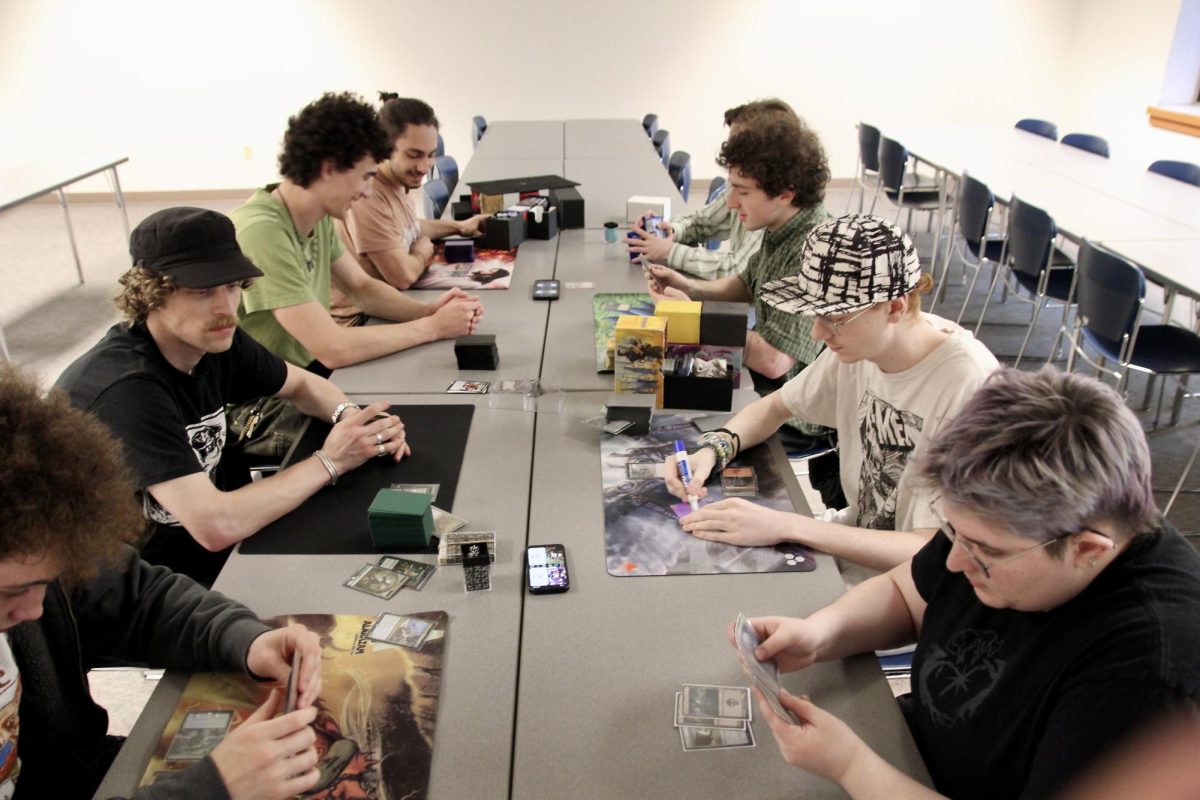
Every week, zombies, rats and legendary creatures come alive inside Pigott. Around a cluster of tables, focused students shuffle their cards and roll a 20-sided dice. Three-and four-person matches unfold at once.
To an outsider, it might look like a normal card game. But a few minutes in, you realize there is much more depth to it. It’s strategy, luck, spells and a little bit of chaos.
Magic: The Gathering (MTG) is a tabletop card game where players play wizards, called Planeswalkers, summoning creatures and casting spells to defeat their opponents. The cards themselves represent spells that players can cast for their ‘mana’ cost, a resource which players must build up throughout the game.
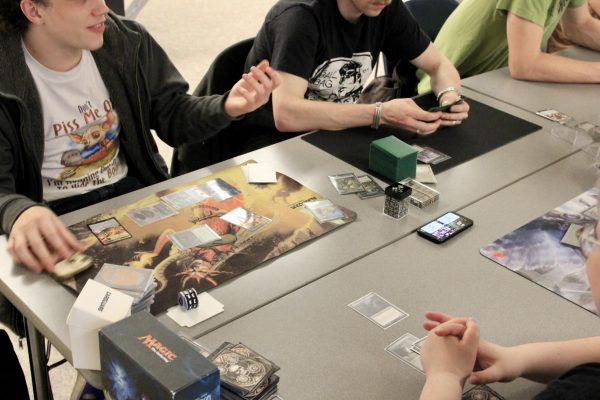
MTG is laden with traditional fantasy elements; however, it often features other genres and themes, including sci-fi and crossovers with other popular IPs (Teenage Mutant Ninja Turtles and Final Fantasy, for example). Similar to trading card games like Pokémon and Yu-Gi-Oh!, the game has both a collecting and trading aspect, as well as strategic gameplay featuring resource management and combat. But MTG is way richer in strategy.
Paolo Saliba, a third-year computer engineering student and one of the club’s founders, didn’t arrive on campus with a built-in Magic community. After growing up playing casually with his brother, he drifted away from the game until the summer before his second year, when he started playing again more seriously.
That momentum paused when Saliba studied abroad in Korea.
“I kept up with it online,” Saliba said. “But I didn’t have a community. I just wanted to play.”
Back in Seattle, unsure where to find other players, he considered starting a club. Hearing that other students had the same idea gave him the push, and the club officially launched during winter quarter of 2025 with just a handful of members. Now, it regularly draws around 10 students, sometimes reaching 20 on busier weeks. Tables fill quickly, and multiple games run side by side.
“It’s really this year where we picked up a lot of new members,” Saliba said.
And those members come from everywhere.
“I think they’re ‘nerd majors,’” he joked. “But you can be a nerd in any major.”
Pepper Berry, a third-year computer science and computer engineering double major, remembers noticing a game happening in their dorm.
“I saw people playing in my lobby,” Berry said. “I went up to them and asked when they played, and they told me there was a club. So I joined.”
For Berry, similar to Saliba, the game is also tied to family. He and his brother grew up playing Pokémon, but now they are all over Magic. They laughed, recalling their first deck built around powerful creatures and passed down from their father.
Most games are not one-on-one. Instead, students gather in groups to play what’s known as Commander, a format that revolves around building an exactly 100-card deck around a central legendary creature that defines each player’s strategy.
“It’s just more enjoyable,” Berry said. “You get more cards, more options.”
Their current deck reflects that philosophy: zombies. The goal is simple. Build an army and overwhelm the table.
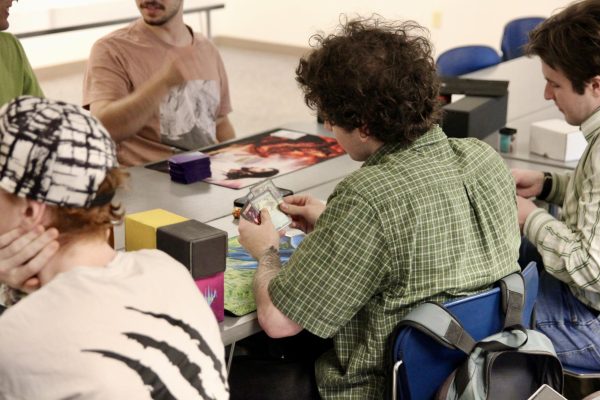
Fourth-year Biology Major Mason Hogan has been playing Magic on and off since elementary school. After rediscovering the game in high school, he returned to it more seriously in college.
“I have a bunch of decks,” Hogan said. “Some real, some printed.”
That practice, known as proxying, highlights another side of the game: cost. Competitive decks can reach hundreds or even thousands of dollars, pushing players to get creative.
“Good cards are expensive,” Hogan said. “So you either invest in them or find ways around it.”
For some, that challenge becomes an opportunity. Hogan described buying dozens of copies of a card for a dollar each, predicting that a new release would increase its value. When it did, the cards jumped to five dollars each.
“It’s like a business,” he said. “You learn how to lose money before you make money.”
Still, the club is not just about strategy or profit. At its core, it’s about making the game accessible.
“We have a beginner box,” Saliba explained. “It walks you through your first game. The cards are set up so it plays the same way every time, and there’s a guide to help you.”
New players usually begin with one-on-one matches before moving into larger multiplayer games.
That intentional approach reflects openness. Beyond weekly meetings, the club hosts events like drafts, where players open fresh packs and build decks on the spot, as well as small fundraisers. At one event, members baked cookies shaped like mana symbols. Seattle itself is part of the story: Wizards of the Coast, the company behind Magic, is based nearby in Redmond and is also known for Dungeons & Dragons.
Games stretch late into the evening. Somewhere between learning the rules and losing your first game, something unexpected happens. The pieces all click together. You start to see the way moves can be combined for added effect. You start to see the strategy and where your deck can be improved. And just like that, you’re hooked.


![Peggy, Mink and Bladee Make Good on Threats to Drop Music [REVIEW]](https://seattlespectator.com/wp-content/uploads/2026/05/unholytrio-review-web-1200x900.png)