
The percentage of unemployment for young graduates aged 22 to 27, according to the New York Times, increased from 4.2% in 2020 to 5.6% in 2025. These are troubling statistics for young graduates who are poised to enter the job market and translate their education, skills and experience into viable jobs.
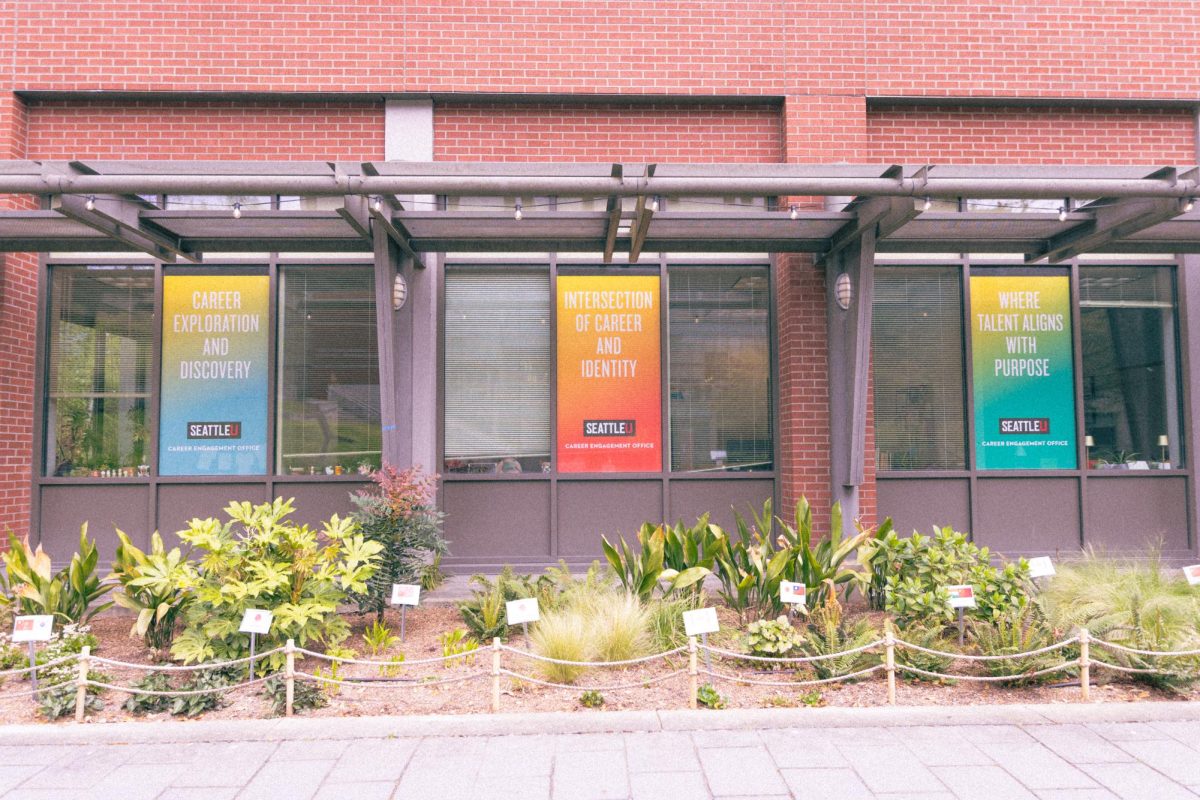
To assist students in navigating an increasingly narrow job market, the Career Engagement Office (CEO) provides one-on-one consulting, where students can workshop their resume and cover letter, explore jobs and internships and receive general career path advising.
Christopher Milliken, the CEO’s new director since March, gave some perspective on some of the factors responsible for the state of the job market, which has been reported as the worst in decades due to high unemployment, a lack of job growth, weakening of the college degree and uncertainty around AI.
According to Milliken, while there are many uncertainties, there are still lots of opportunities for Seattle U students to build the necessary foundational skills employers are looking for.
“Employers are telling us that they have started to slow down new graduate hiring with the intent of understanding how AI is going to impact that segment of the job market. There’s still hiring, it’s just less,” Milliken said.
Pamela Tamri Saunyama, a graduate accounting student in the Albers School of Business and Economics, shared her experience and struggle before landing a job and an internship.
“To get a job, I think it took me two quarters. We are talking about applying every day. So that was really tough. I remember looking at the number of jobs that I applied for, and they were more than 100, and I was like, ‘Wow.’ Eventually I got one,” Saunyama said.
The CEO played a big part in landing Saunyama her job. They aided her in fixing her resume, gave interview advice and built her confidence to start her applications.
Daisy Lugo, a second-year biology major and CEO undergraduate intern, also faced the job market hurdle before landing her current role.
“I didn’t know about the career engagement office, so I was having a very hard time looking for a job. It was around December when I really needed a job. So, I was just applying everywhere. I was applying off and on campus,” Lugo said.
The CEO aims to better equip students entering the job force with support and resources. Kiyana Higa, associate director of the CEO, emphasized her office’s student-support role.
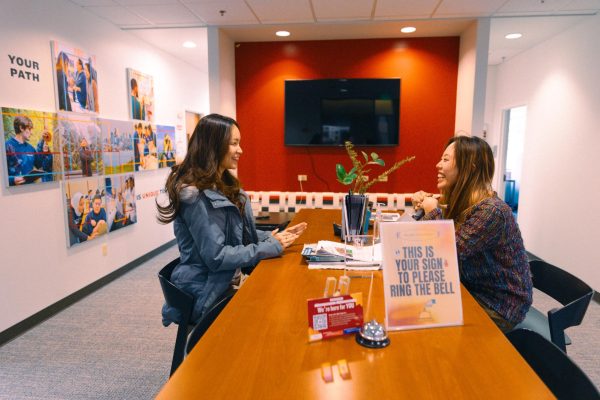
“Our office’s main goal is to support students even before they are thinking about their job. As soon as they start as freshmen, we really encourage students to come and talk to us and find out what they can do to set themselves up for success so that it doesn’t feel as overwhelming by the time you hit junior, senior year,” Higa said.
Milliken also explained the future strategy and objectives of the office for Seattle U students. As the job market landscape is constantly changing, the CEO aims to utilize all preexisting resources and give students a wide range of working advice.
“The current future of career engagement is providing opportunities for students to continue to build [foundational skills], but to also build confidence to be able to articulate those. A big piece of my role is working externally with larger and smaller companies and nonprofits to create relationships that help facilitate pathways for students,” Milliken said.
However, though the CEO exists to facilitate viable career pathways for students, there might still be gaps in students’ knowledge of resources available to them and in utilizing them. Higa hopes that their office can work to bridge these gaps to help students stay ahead of the curve.
“We’re trying to bring more employers to students so that they have more opportunity to be in front of them, to make an impression, to hopefully create a connection before graduation, so that they are much more ahead of other candidates, ” Higa said.