

If you’ve driven across Lake Washington via I-90 at any point in the last decade, chances are you’ve seen construction occurring in the water between the east and westbound lanes. Crews have been working since 2016 to construct an extension of the Light Rail and connect Seattle to Bellevue and Redmond.
Saturday, March 28, three years past its planned opening date, the Sound Transit 2 Line took its first riders across Lake Washington on the world’s first track built on a floating bridge. Two more stations connecting the lines, Mercer Island and Judkins Park, also opened to the public. Opening day was mobbed by celebratory riders: over 200,000 people rode the Light Rail, just below the record of 225,000 riders Feb. 11, the day of the Super Bowl victory parade.
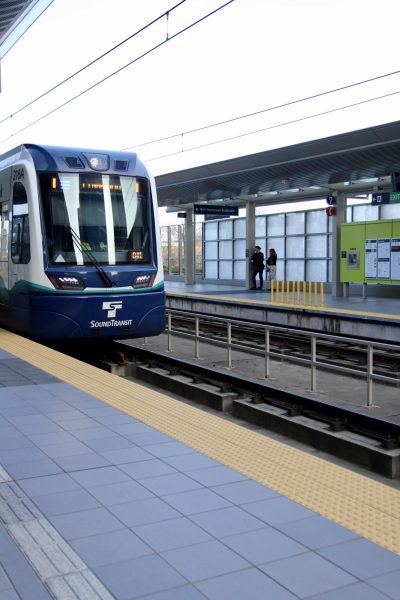
A portion of the 2 Line has been operational for some time in Bellevue: riders east of Lake Washington have been able to traverse eight stations from Redmond to Bellevue since 2024, when a truncated version of the 2 Line (referred to as the “Starter Line”) opened; Marymoor Village and Downtown Redmond joined in May 2025. The rest of the expansion, often called ST2, was delayed due to a combination of legal and logistical challenges during the construction process.
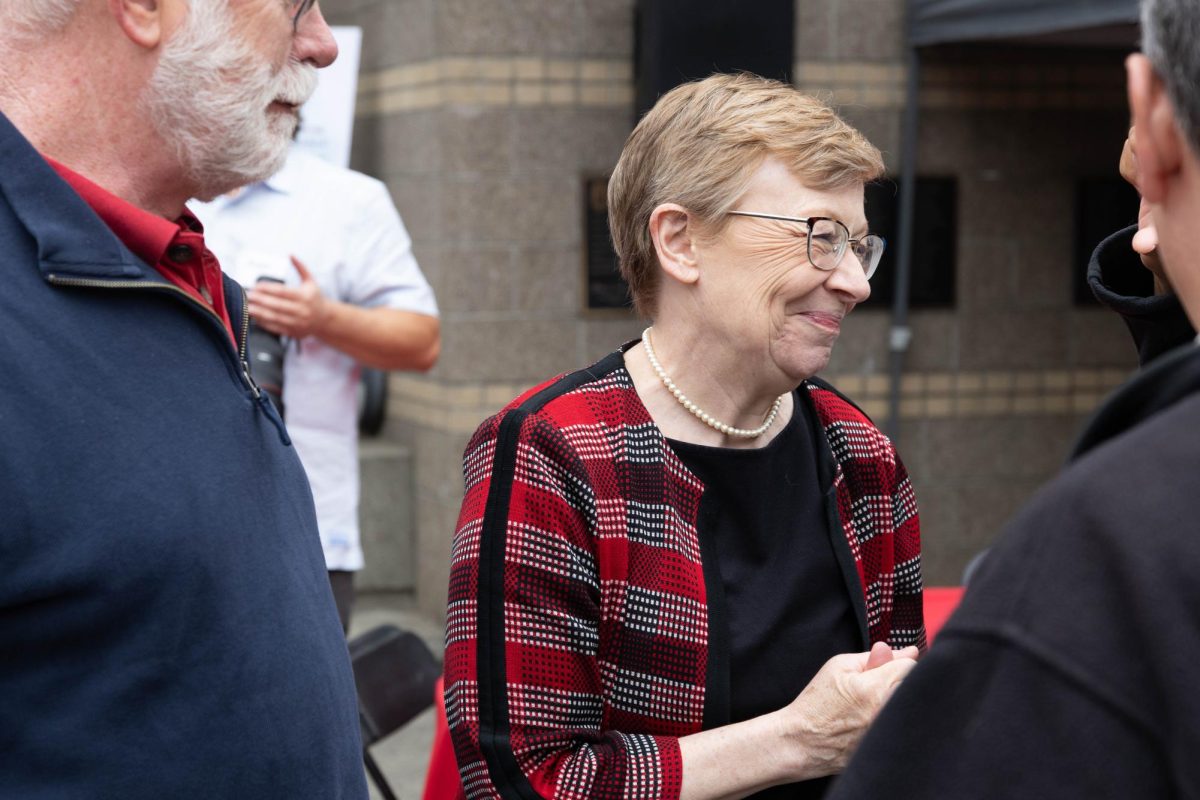
“There were ballot measures on whether to fund it or not. There were lawsuits, one of which went all the way to the U.S. Supreme Court,” King County Councilmember for District 6 and strong proponent of the ST2 expansion, Claudia Balducci said. “Then there were permitting discussions and financing discussions. It was a multi-front, multi-year debate that added three years to the project.”
Three lawsuits, one filed by Bellevue developers in 2009 and two by the City of Mercer Island in 2017 and 2020, respectively, were filed against Sound Transit in attempts to stop or change the development of the East Link. The 2009 lawsuit, which made it to the Supreme Court (and ultimately ruled in Sound Transit’s favor), alleged that I-90 couldn’t be used for the Light Rail because its construction was financed by gas taxes, funding that was intended for cars. The 2017 and 2020 suits revolved around Mercer Island residents’ access to HOV lanes on I-90; both ended in settlements.
Things weren’t much better on the construction front: because the Homer M. Hadley Memorial Bridge floats on Lake Washington, the new railway couldn’t be built like any other track in the world. The tracks had to be flexible over the water while connecting safely to the solid tracks on either end of the bridge, making it the first railway over a floating bridge.
During construction, crews had to mitigate failed mortar, unstable concrete plinths and unusable rail fastener bolt inserts. When those issues were solved, strikes by concrete delivery truck drivers delayed work even further.
“There were times when I was wondering, is this project just a snake pit?” Balducci said. “But we persevered through it all, and a lot of people really dedicated themselves. In a way, it makes it that much sweeter to finally be here where people are out enjoying the train today.”
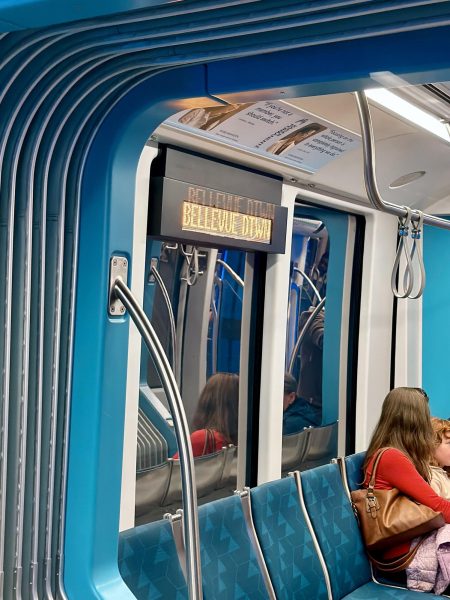
(Justin Hartshorn)
Now that the 2 Line is up and running, Seattle University students can use the Light Rail to travel even farther across the Seattle area. A trip from the Capitol Hill station to the Downtown Redmond station (the last stop on the 2 Line) takes just under 50 minutes. While slightly longer than it typically takes to drive the same distance, it avoids the hassle of traffic, gas prices and parking.
“It’s great that there’s another option other than buses to get east of Seattle now—it’ll definitely attract a lot of people,” Kat Aldrete, a first-year psychology major who rode the 2 Line shortly after opening day, said. “It’s especially nice for someone like me who doesn’t have a car.”
The convenience the 2 Line offers makes it great for both recreational and professional travel. Commuter students at Seattle U can use it to travel from east of Seattle straight to campus. Unlike buses, which can be delayed, the Light Rail is punctual. It arrives every eight minutes during peak hours. According to Balducci, rapid transit lines along I-405 and SR 522 are also still planned.
“It’s going to have a beneficial impact on commuter students, and it’s definitely going to make it easier to commute from outside of Seattle,” Luis Ramirez, Student Government of Seattle U commuter senator, said. “Over the next few years, we might see the number of commuters increase because transportation is more accessible.”
The Light Rail already accommodates nearly 110,000 boardings per day, but the ST2 expansion has vastly widened the number of places where riders can go. A $22 to30 billion budget deficit may delay or change the 3 Line expansion to Ballard and West Seattle, which plans to add 37 new stations over 60 miles of track, but Seattle’s public transit systems will continue to improve regardless.