
For the 10th year in a row, Seattle University is participating in the nationwide Campus Race to Zero Waste, a competition running through the end of March that challenges over 1,000 universities to lower their environmental impact.
Last year, Seattle U was awarded first place for waste diversion, with 71.04% of the campus’s waste diverted from landfills for the duration of the contest. This fact has left the Center for Environmental Justice and Sustainability (CEJS) eager to defend its title.
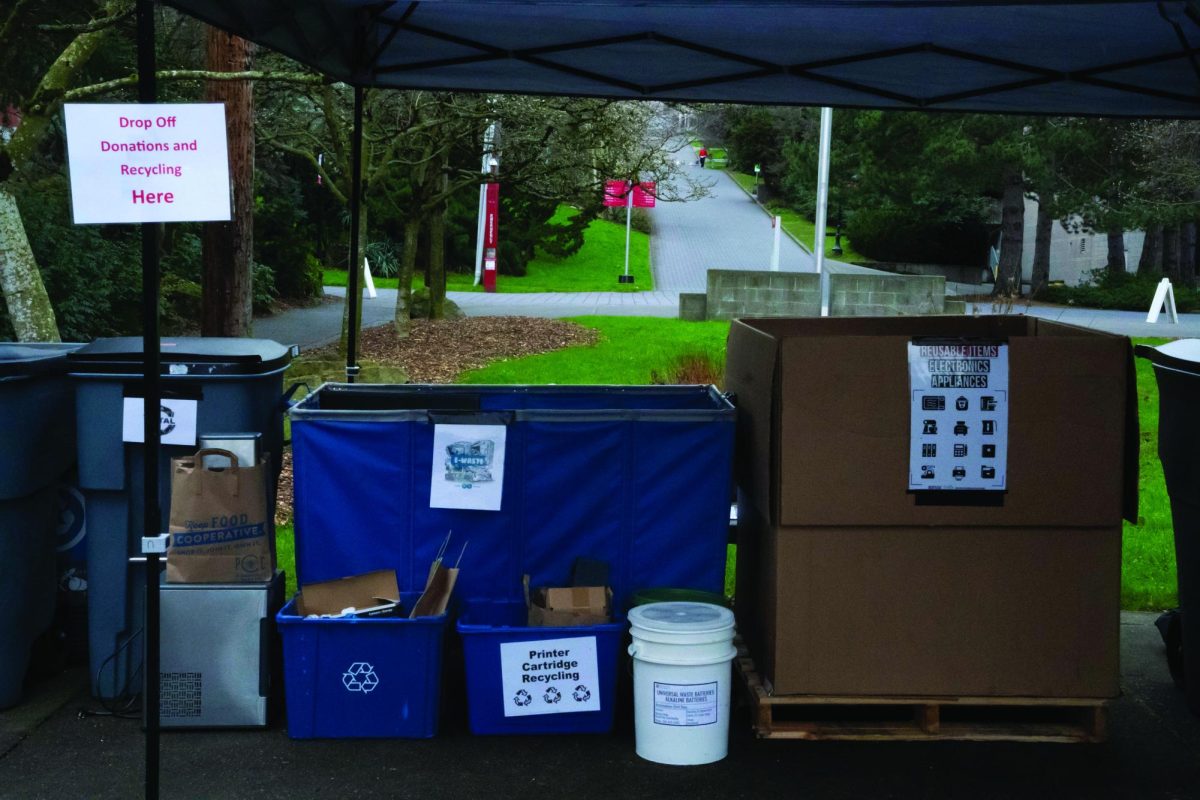
Central to the challenge are two community recycling days hosted by the CEJS, the first of which took place Feb. 18. Large bins lined the roundabout in front of Bellarmine Hall, allowing community members to drop off old clothing, furniture and electronics to be properly donated or disposed of.
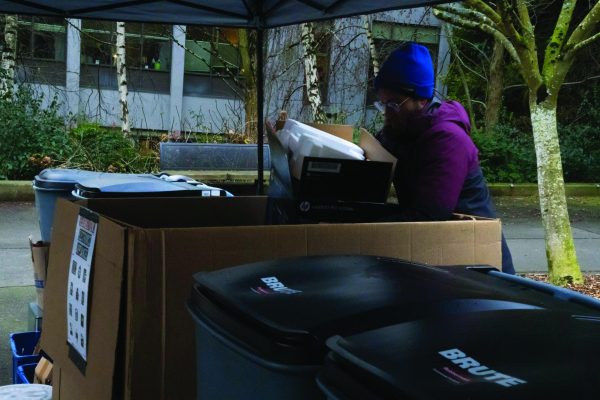
“A lot of times, people don’t actually know where things go or how to differentiate them, so we’re here to help them figure that out,” Sophia Hampton, CEJS’s sustainability coordinator, said at the event. “We’ve had many community members come by, a lot of staff. It’s been a really popular event for the past few years that it’s been put on. Definitely something that we wanted to continue this year, because we know that the community appreciates it.”
Kelli Che, a CEJS student employee and third-year cell and molecular biology major, also attended the community recycling day, describing the event as an overall success.
“There were actually a lot of people that came, and almost everyone had a reusable thing for us,” Che said.
According to the Environmental Protection Agency, the majority of discarded clothing ends up in landfills, even after passing through thrift stores first. To prevent this, CEJS works directly with the Northwest Center, a Seattle-based nonprofit that supports children and adults with disabilities, and King County’s recycling services. CEJS helped donors sort their items into wearables and unwearables, ensuring reusable items go to people who can benefit from them and that items that must be disposed of are properly recycled.
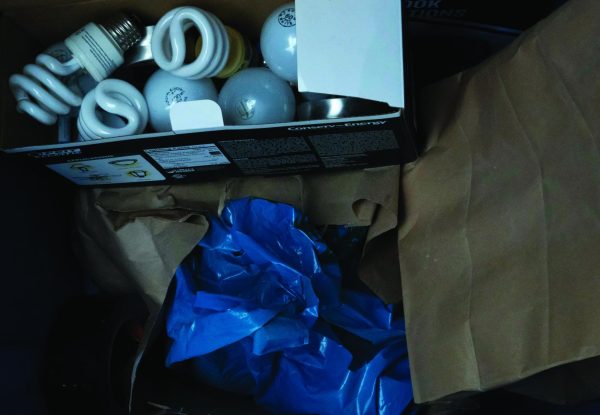
The same is true for large furniture and electronic devices, which require specific and careful disposal due to their potential to contain toxic chemicals. Because of this, CEJS also offered e-waste disposal bins at various locations around campus throughout the month of February. Starting March 1, these bins will be replaced with similar options for clothing donation and recycling.
One such bin is located next to the HUB desk on the first floor of the Student Center, where Third-year Political Science major Emily Robello spends time as a student employee. Though Robello has seen few students using the e-waste bins, she’s optimistic about their overall impact.
“I was really happy when they put it in. We get a lot of traffic through the floor, so this is a really, really good place for one of these things. I know a lot of people have a lot of broken things that they just keep around and they don’t want to throw it away because they spent a lot of money on it, so this is one of the better ones… an actually good idea that students could actually access,” Robello said.
Throughout the first week of February, sustainable events also took place in Cherry Street Market. Dining hall employees weighed total food waste as students threw away their leftovers, as well as how many disposable containers—intended for students on the go—never left the dining hall.
“According to our recycling team, we had 603 compostable boxes that never left the student center,” Che said. “We’re still doing data analysis, but having that information is really helpful.”
Last year, Seattle U introduced Ozzi boxes, reusable containers provided to students with meal plans during move-in weekend. These boxes were introduced as a collaborative effort between CEJS and Chartwells, intended to reduce waste created by disposable containers. Boxes can be returned to dining locations around campus, where they are sanitized and handed back out to students. Students are given a carabiner to trade back the next time they require a box.
While Robello has observed a decline in the use of these boxes since their introduction, she stated it is not uncommon to see students with Ozzi carabiners on their belt loops and lanyards, reflecting the university’s sustainable efforts.
CEJS will be hosting its second community recycling day March 11. Throughout the month of March, clothing donation bins will be located in the lobbies of each residence hall, the HUB desk of the student center and the second floor of the Lemieux Library. Updates will be shared via Instagram at @su_cejs.