

Blocks in South Downtown are filled with dim sum, herbal and grocery shops, martial art clubs, parks offering contemplation and historical sites of perseverance. Seattle’s Chinatown-International District (CID) has been a home for immigrants since the late 1800s and is a beacon in Washington’s landscape.
The Seattle U Albers School of Business and Economics received a $125,000 grant from the JPMorgan Chase Foundation to provide direct support to small businesses in the neighborhood leading up to and after the World Cup.
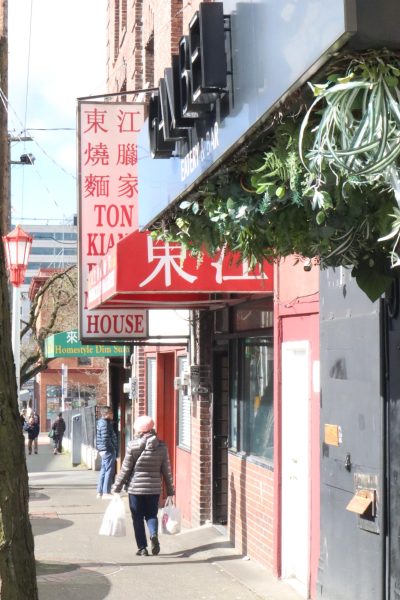
Recently, the CID has been struggling with significant economic and cultural pressures, including limited access to capital, rising vacancy rates and crime and open-air drug use, which the COVID-19 pandemic has exacerbated. In 2023, the National Trust for Historic Preservation named the CID to its list of America’s 11 Most Endangered Historic Places.
With the FIFA World Cup approaching this summer, organizations in and around the neighborhood are motivated to support the CID’s well-being and ensure it is prepared to host international visitors, as the soccer matches will be held only a few short blocks away.
A two-year initiative funded by the grant, part of Seattle U’s Resource Amplification & Management Program for Urban Prosperity (RAMP-UP), will provide targeted support to 25 small, owner-operated businesses in the CID at zero cost. The initiative is being led in partnership with the University of Washington’s Foster School of Business (with UW being sponsored by The Asian American Foundation), Chinatown-International District Business Improvement Area (CIDBIA) and Friends of Little Saigon (FLS); it’s better known as the “CID Business Accelerator Program.”
Split into three tiers, the first tier of the program is a business workshop series led by UW that covers strategies for improving digital marketing and overall management best practices. The other two tiers are led by Seattle U; the second offers up to 80 hours of one-on-one consulting support, providing financial literacy support and preparation for the World Cup. The third tier offers up to 500 hours of consulting projects for long-term growth beyond the World Cup. Between Seattle U and UW, there are seven student consultants leading the workshops and client accounts. All of them are graduate students, except for one Seattle U undergraduate student.
According to Janie Ng, program director for community impact at Albers, the program had already been in the works for over a year, and the motivation to work with the CID was in part due to its endangered status. There have been 88 Chinatowns in the United States, but only about half are active today, with gentrification being the main cause of their decline.
It was important to Ng and UW that they partner with local organizations such as CIDBIA and FLS, as these organizations already understand the neighborhood’s needs and have established relationships with CID business owners.
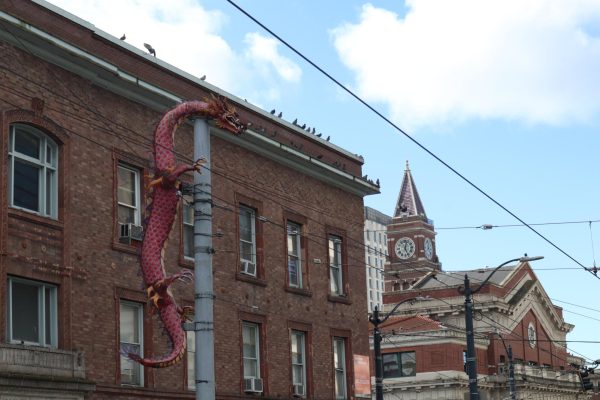
“It’s not like SU’s going in and taking over, or UW’s going in and taking over. We are guests in these spaces, so we need to have partners that can kind of take us for a walk [through the CID],” Ng said.
Given the CID’s large population of non-English-speaking immigrants, it was necessary to strategically hire consultants who spoke languages other than English. Four of the five Seattle U consultants can offer services in Mandarin, Cantonese or Vietnamese. The only monolingual student is primarily responsible for finance management, specializing in the language of numbers.
“Most of our clients can speak English, but I notice that when they have someone who can speak their first language, they become more relaxed,” Trang Nguyen, team lead for the student client account managers, said. “Sometimes, in meetings, they will need a person to translate back certain phrases into their first language that they don’t understand [in English]. I think that it is comforting for them [to have that support].”
Since its official launch last month, six businesses are already participating in the program: Chu Minh Tofu, Oasis, Africanita, International Beauty Academy of Washington, Gan Bei and World Pizza. Two others are in the process of joining.
UW aims to bring on 30 businesses by the time the World Cup kicks off in June, while Seattle U hopes to bring on 25 over the two-year period. The rapid pace of UW’s goal is because they will not be working as closely with the program once the World Cup concludes, and their main goal is to help businesses—especially those with older owners—establish a stronger digital presence before tourists arrive.
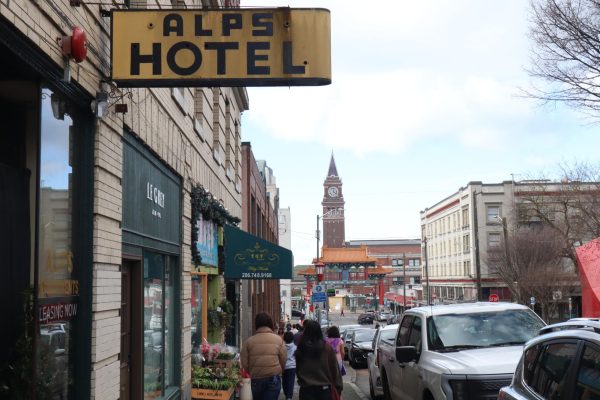
(Leila Bunker)
Alina Doan, community outreach coordinator at FLS, is helping connect businesses to the program. Doan herself has experience providing technical assistance to small businesses in Little Saigon, attesting to the difficulties older owners face with digital literacy; she has assisted a handful of businesses in claiming their Yelp and Google pages.
Aside from her role with FLS, her connection to the neighborhood dates back to her youth, when her father owned the LV’s Produce approximately 20 years ago, which closed in 2017. Thai Binh Apartments now stand where the former grocery store once stood.
She still runs into people who shopped there while it was open; the owner of Hello Em, a cafe specializing in Vietnamese coffee, told Doan that she used to visit once a week. For Doan, the contributions of small businesses to a neighborhood go beyond economic value and serve as a larger symbol for connection with the community they serve.
“Something I actually found out, working in this neighborhood, is that the people that come to these restaurants, these grocery stores—they’re regulars. The business owners have developed such a good relationship with everyone they serve. That’s what brings them back,” Doan said. “It’s literally just community, and I think that’s what’s keeping them alive, honestly.”
The CID has long been a tight-knit community. Formed in the early twentieth century, the neighborhood’s growth was fueled by Seattle’s expanding Asian trade, and by the construction of King Street in 1906 and Union Station in 1911 along the district’s border. But it was also one of the few places in Seattle where immigrants could settle at the time.
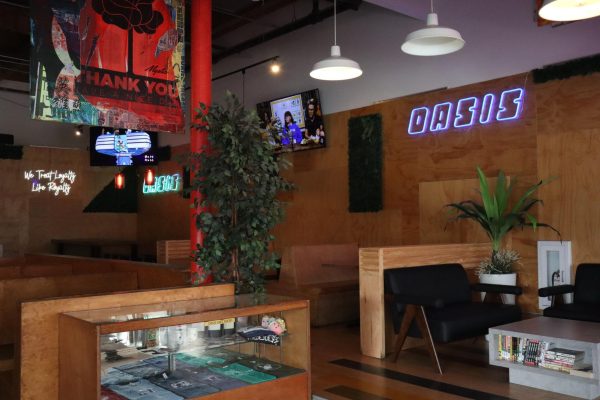
“Chinatown is a place where people would go when nobody else would take them,” Executive Director of Historic South Downtown, Kathleen Johnson, said. “Chinese laborers and their families, and then African Americans, were not allowed to live anywhere else.”
Seattle’s Waterfront and South Downtown used to be a tangle of tracks and railroad structures. The living conditions were extremely poor, but even though most people didn’t want to live there, a growing number of Japanese immigrants began to populate the neighborhood, followed by an influx of Filipino families in the 1920s. The neighborhood developed a distinctive multicultural character that remains today, with Asian and Black businesses operating side by side along Jackson Street.
In the 1970s, immigrants from Vietnam, Laos and Cambodia were joining the neighborhood, and Southeast Asian merchants established their own commercial center, known now as Little Saigon, around the intersection of Jackson Street and 12th Avenue.
The CID was officially listed on the National Register of Historic Places in 1986. This type of designation offers potential tax incentives for the rehabilitation of historic properties and increased eligibility for federal grants and recognition as a significant location. However, preservation isn’t mandatory; the coalition of organizations in and out of CID that work together to preserve and protect the neighborhood does so entirely out of a sense of care for the place they live and work.
The Business Accelerator initiative addresses the urgent need for structural resources and sustainable solutions for small businesses, using World Cup readiness as a motivating deadline. However, the dual challenge is ensuring businesses are operationally prepared for FIFA while also drawing visitors and Seattleites to the neighborhood before the crowds arrive.
“The World Cup is going to be a huge thing, but the pre-work to changing perception and unifying the neighborhood is going to be even more important,” Executive Director of CIDBIA, Tuyen Than, said.
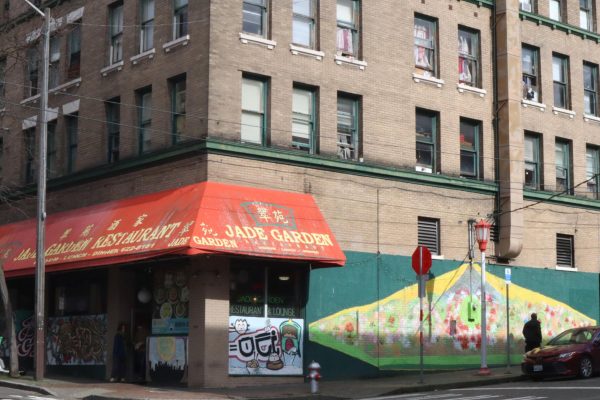
(Leila Bunker)
The CIDBIA hosts a variety of annual events, including a Night Market. According to Than, the Night Market in September drew approximately 65,000 attendees under the red arch in Hing Hay Park. As the Business Accelerator aims to combine operational improvements with coordinated marketing efforts, Than pointed to the Night Market as an example of how she and her partners can learn from its success to attract people.
Next month, CIDBIA will be hosting its annual Lunar New Year Celebration March 7, which will feature lion dances and martial arts performances, as well as vendor booths set up along South King Street.
In tandem with the Business Accelerator, the CIDBIA also is implementing efforts to improve public safety and visibility; CID brochures for visitors will be distributed across the city; grants up to $10,000 are being offered to small businesses and non-profits to help cover costs for special events; lighting will be increased with more lanterns; the number of CIDBIA safety ambassadors that roam the neighborhood is expanding; and increased sanitation will be implemented in preparation for large crowds.
“This neighborhood has the highest density of immigrant-owned, family-owned restaurants, but we also have a lot of nonprofits working towards the goal of the betterment of the CID,” Than said. “We all have the same goal of wanting this neighborhood to survive and thrive into the future.”
A correction was made on Feb. 26, 2026: This article has been updated to clarify that Seattle U is being sponsored by the JPMorgan Chase Foundation, and that UW is being separately sponsored by The Asian American Foundation. A previous version of the article stated the JPMorgan Chase grant was sponsored by TAAF.
Corrections are made during production when errors are identified in time, so not all corrections may appear in every edition.