
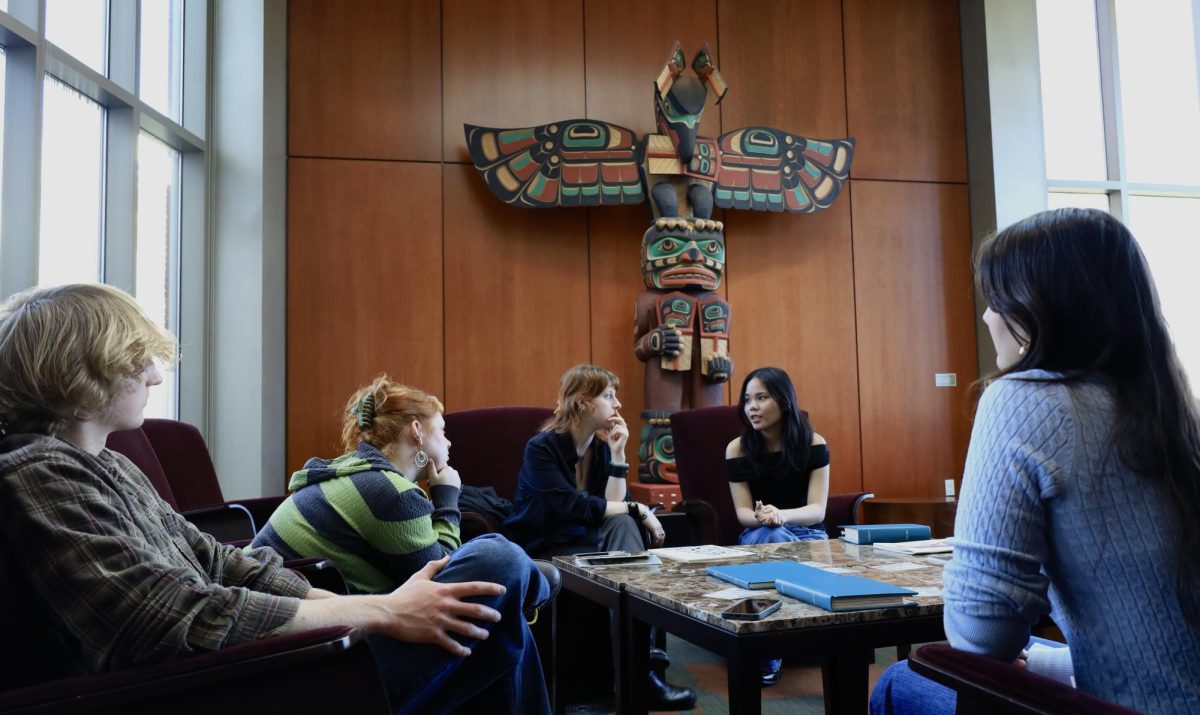
Under the bright glow of the Wyckoff Reading Room, decades of Fragments issues were spread across the tables, a display of student expression dating all the way back to 1958.
In this room surrounded by magazines and periodicals, a new generation of writers gathered Tuesday, Feb 10, to learn how they could get published in Fragments, Seattle University’s student-run literary and visual arts magazine, which is currently accepting submissions for its latest issue, themed “Curio.”
Fragments provides a platform for undergraduate poetry, prose, photography and other creative work. The magazine publishes one issue annually and is focused on expanding student participation. With “Curio,” a word describing the unusual, as this year’s theme, editors hope to encourage students to experiment, reflect and submit work that captures moments or emotions that are strange or intriguing.
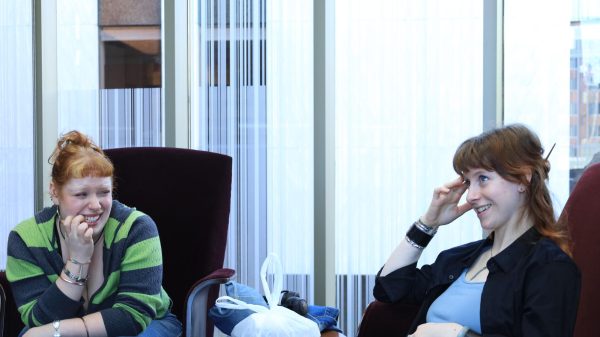
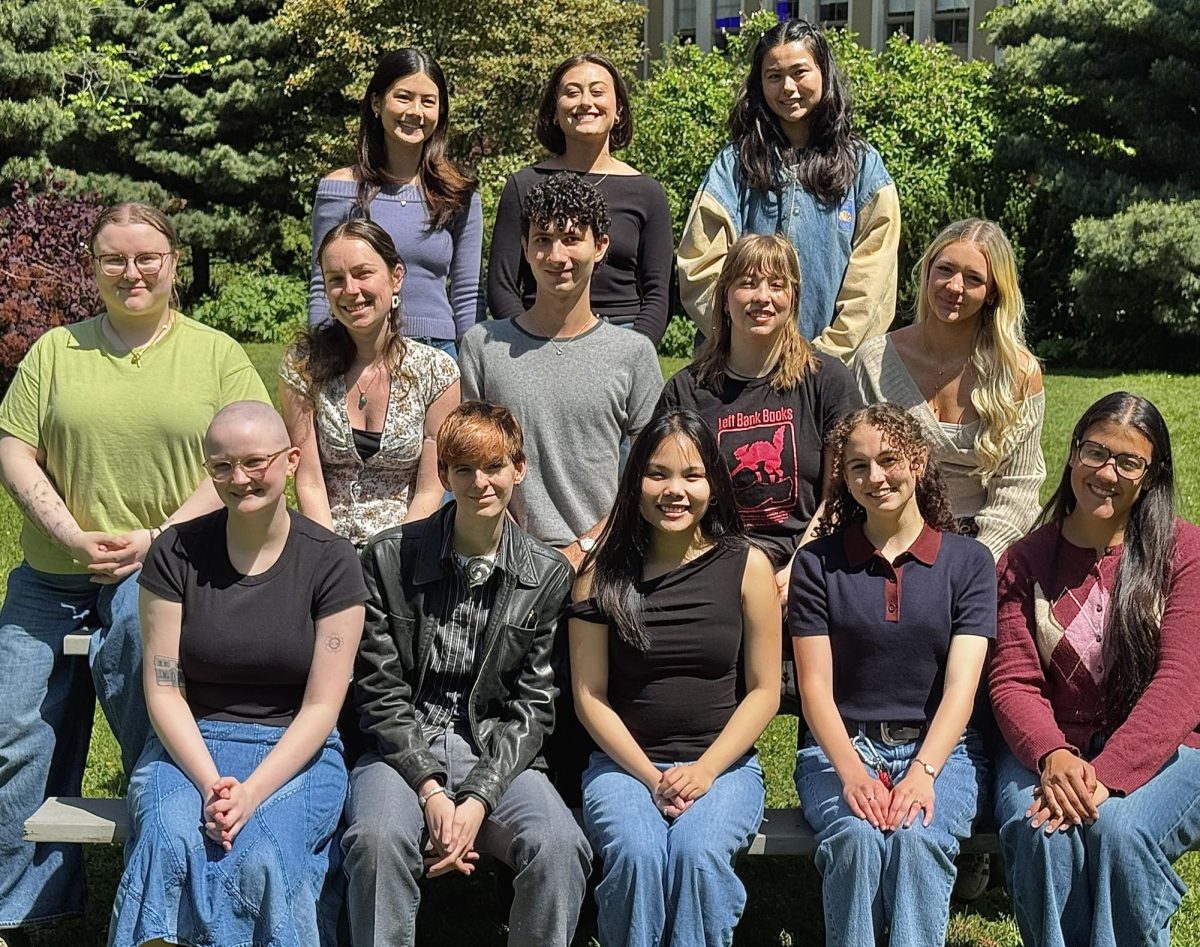
Fragments is led by co-presidents Vanessa Vu, a third-year English literature major, and Sophie Flamoe, a fourth-year marketing major. While the co-presidents guide the group’s direction, leadership at Fragments is collaborative, with all officers contributing across planning, outreach, budgeting and event coordination.
This collaborative approach was evident in the selection of this year’s theme. Members proposed an array of ideas, including ephemeral, angelic and Wabi-Sabi, a Japanese aesthetic that is centered on the appreciation of imperfect beauty. They narrowed their choices through discussion, voting and visual mood boards.
“While many people associate the word curio with something odd, I view it more as the uncommon. It could be a photo that captures a rare feeling of bliss or sadness, or perhaps something that intrigues you, such as architecture or the unique structure of a poem. To me, there are no boundaries to what curio can be,” Vu said.
Beyond publication, the magazine provides a room for reflection and experimentation, allowing students to explore ideas that might not fit into traditional coursework.
Flamoe emphasized the need for students of all majors to have the opportunity to see themselves as both artists and students.
“Creativity is wrapped up in everything; it helps us through difficult times. I saw that in the work last year, and I see it now in the way students contribute to the journal,” Flamoe said.
The editorial team at Fragments prioritizes a supportive environment over a competitive one. When reviewing submissions, the editors work together to see how different pieces might interact on the magazine’s pages.
Instead of applying any strict rules to an entry, they focus on how a piece of art or writing may move the reader. By welcoming submissions from all majors and skill levels, the magazine lowers the barriers that keep students from seeing themselves as artists.
Badger Compain, a fourth-year creative writing major and the events coordinator for Fragments, explained that the focus is always on the final product rather than a critique of a specific piece’s creator.
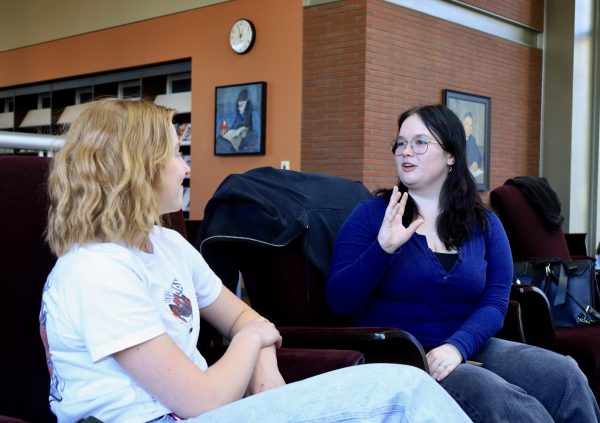
“Much of the deliberating process is more oriented towards formatting and ordering one piece next to another, not judging student work,” Compain said.
This welcoming environment helps students overcome the fear of sharing personal work. Since art is so closely tied to identity, the submission process can feel risky. Fragments offers a safe starting point for students to practice being vulnerable in a professional setting. The goal is not just to publish a magazine, but to make a lasting impact on the student body. The hope is that students see their own work or their friends’ work and recognize this as a space where creativity is honored.
The editors also want to respect the current state of the world by offering a space that serves as both an escape and a reflection.
“I think that this year’s issue will be really contemplative. I think people will walk away having read something that changed their perspective,” Compain said.
Ultimately, Fragments remains an opportunity to explore the uncommon in both art and community. Whether submitting work, editing or simply reading, anyone can contribute to this collective effort, regardless of their background or experience.
Fragments is accepting submissions for this year’s issue until Feb. 20.

![Peggy, Mink and Bladee Make Good on Threats to Drop Music [REVIEW]](https://seattlespectator.com/wp-content/uploads/2026/05/unholytrio-review-web-1200x900.png)