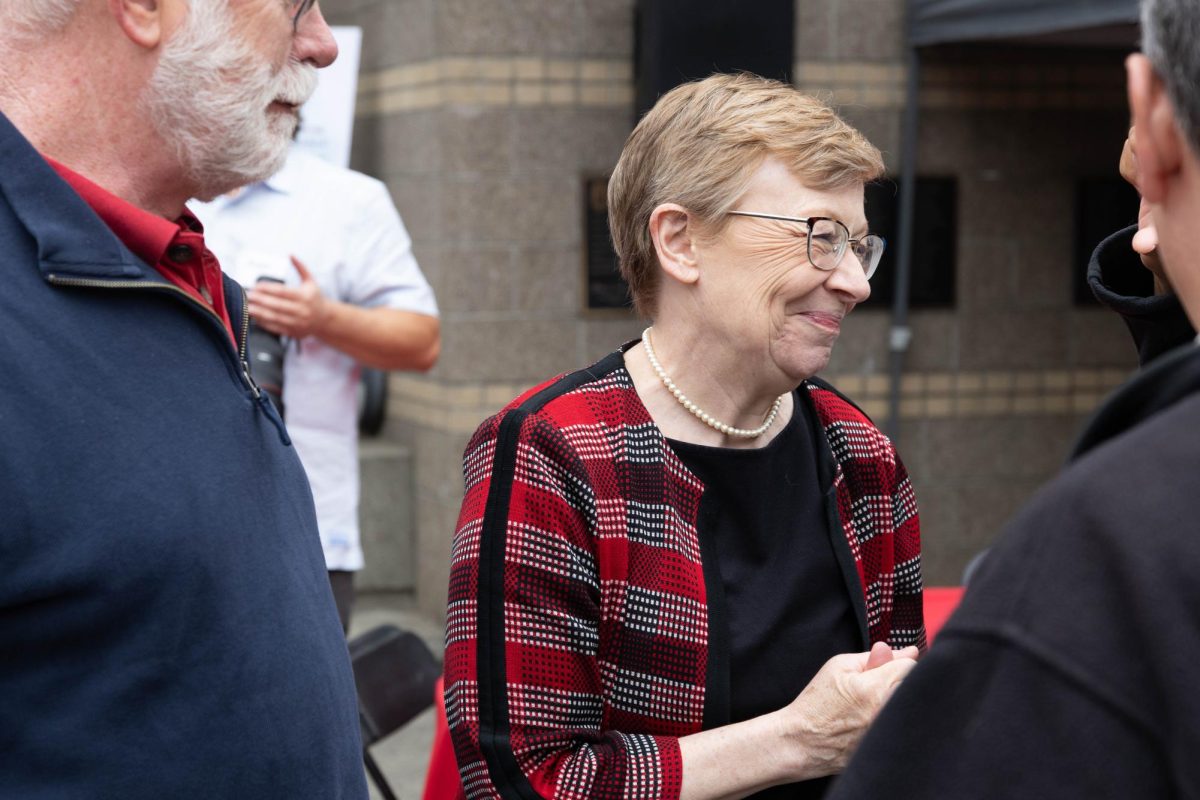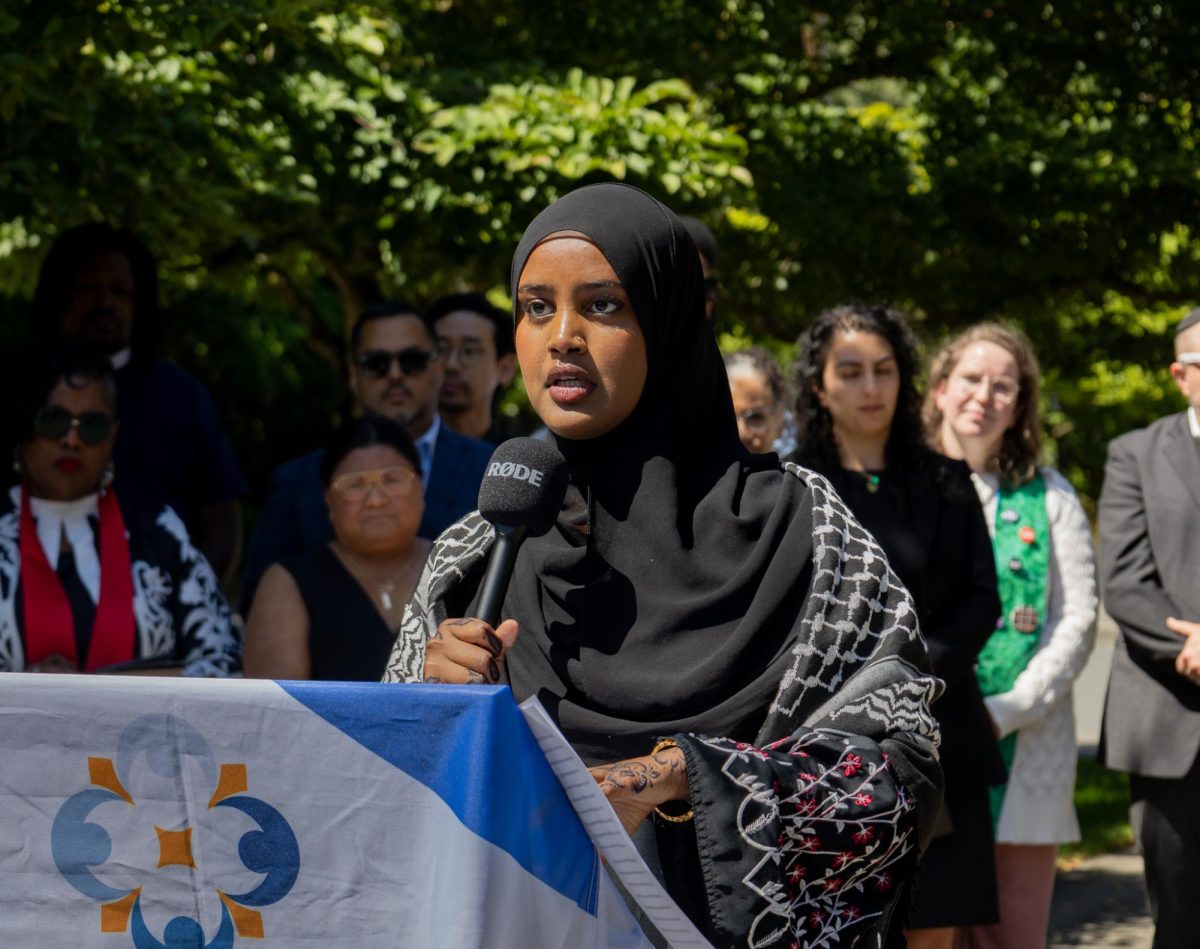

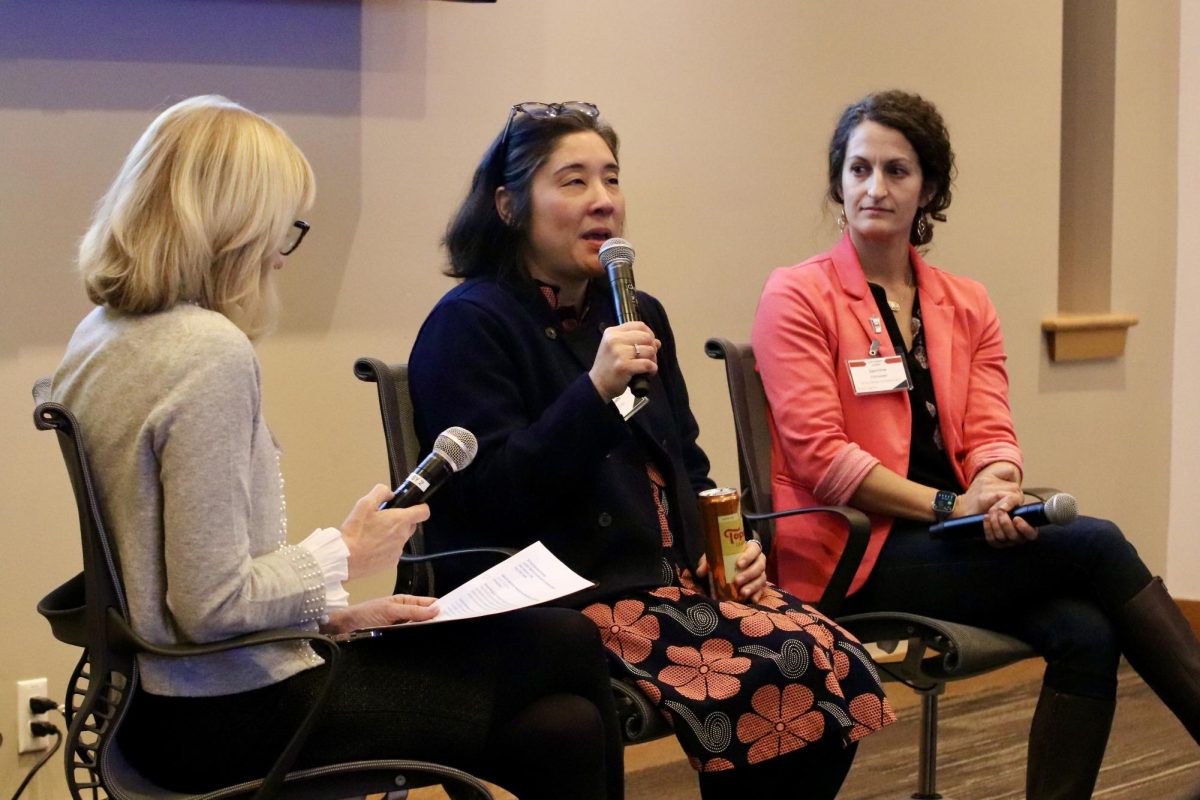
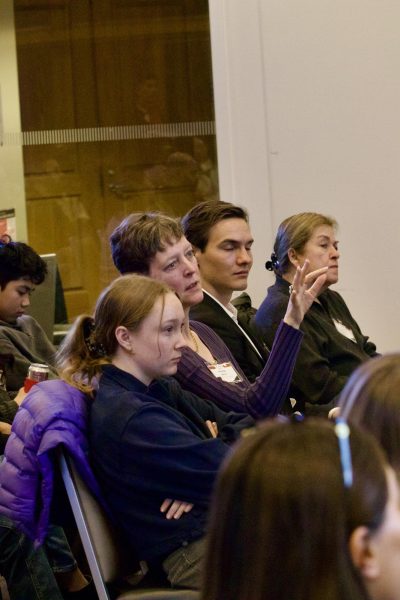
Several dozen students and Seattle-area family business owners filled the Casey Commons Thursday, Jan. 22, to hear the CEOs of two iconic Seattle businesses, Uwajimaya and Dick’s Drive-In, speak as part of Seattle University’s Family Business Exchange (FBX). The FBX is a collective that aims to connect family businesses in the Seattle area. Denise Moriguchi and Jasmine Donovan, of Uwajimaya and Dick’s Drive-In, respectively, answered audience questions about the challenges and rewards of running a family business.
Both Dick’s Drive-In and Uwajimaya have been staples of the Seattle area for decades: Dick’s opened its first location in 1954 in Wallingford, while the first Uwajimaya opened its doors in Tacoma in 1928. The two businesses have grown over the years and passed leadership positions down for three generations, never losing their family-based approach to business through recessions, expansion and, for Uwajimaya’s owners, internment during WWII.
Dick’s is a 1950s-style drive-in whose appeal comes from its classic feel and incredibly low prices. They’ve sold only burgers, shakes and fries since they opened and don’t allow for customizations or substitutions of anything on the menu. Those restrictions allow the restaurant to sell high-quality, inexpensive food: nothing on their menu costs more than six dollars.
“We focus on small profit margins and high product volume,” Donovan said. “That’s what allows us to have the lowest prices and the highest wages and benefits in the market.”
Starting salary for a Dick’s crew member is $22/hour–70 cents above minimum wage in Seattle–and employees have access to full health insurance, childcare assistance, scholarships and even 401k matching. Similarly, Uwajimaya employees have access to many benefits, including paid holidays and long term disability insurance. Both businesses pride themselves on treating their workers like family.
Uwajimaya began out of the back of a truck in 1928. Founder Fujimatsu Moriguchi sold fish cakes and other Japanese staples to laborers on the sides of roads. The business quickly evolved into a wholesale and retail storefront that stocked Japanese food staples for the immigrant community in and around Tacoma.
Just over a decade later, in 1941, the Moriguchi family was forcibly sent to internment camps by Executive Order 9066, forcing the closure of their store; however, upon regaining their freedom in 1945, they were able to reopen Uwajimaya. Since then, the business has opened four stores and plans to open two more in 2027.
“We’ve spent the last few years making things really consistent across our locations,” Denise Moriguchi said. “It’s about having scalable processes and having talent ready to open stores so we can ensure they stay open.”
Staying open is an issue that continues to plague both businesses, as rising post-pandemic prices and cost-of-living increases have driven up overhead costs and shrunk profit margins. Still, both leaders are confident their businesses will survive. Donovan cited her grandfather, Dick Spady, one of the founding partners of Dick’s Drive-In.
“He said, ‘Do what you have to do to survive the short run, but wherever you can, make decisions for the long run,’” Donovan said. “We’ve seen a number of recessions in the past seventy-two years. We just have to keep doing what we’ve always done.”
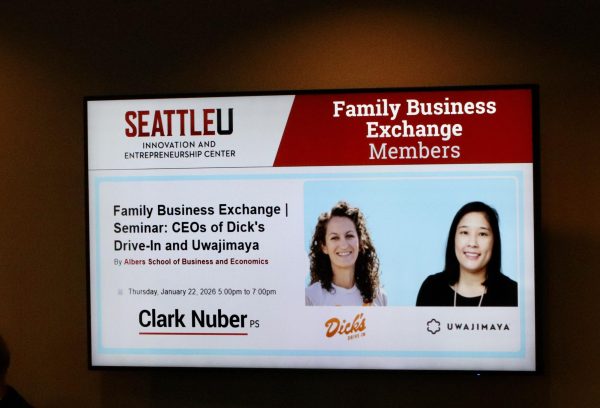
Part of that strategy is being involved in Seattle U’s FBX program, which also partners with Wilcox Farms, Pagliacci Pizza and even Key Bank (as a corporate member).
“Business is tricky and working with family is tricky, but there has to be a lot of love and confidence in your values for either to be successful,” Amelia Marckworth, director of community engagement for the Innovation and Entrepreneurship Center, said. “I think that it is a program that really is made of and for family business owners.”
The FBX hosts one event per month on a three-month cycle–one month is a seminar, one is a workshop luncheon and the third is a recorded webinar. Members also get access to a newsletter, a private LinkedIn group and on-campus programs that support business growth. Everything the FBX does is aimed at connecting business owners, collecting and sharing knowledge, and giving Seattle U students the opportunity to learn from experienced professionals.
Every event hosted by the FBX is free for Seattle U students to attend. Students can get access to networking opportunities before and after the events, as well as the chance to hear from business owners and professionals about what life as an entrepreneur can look like. Next month, Feb. 22, the FBX is hosting a luncheon focused on upholding company values during leadership transitions.