
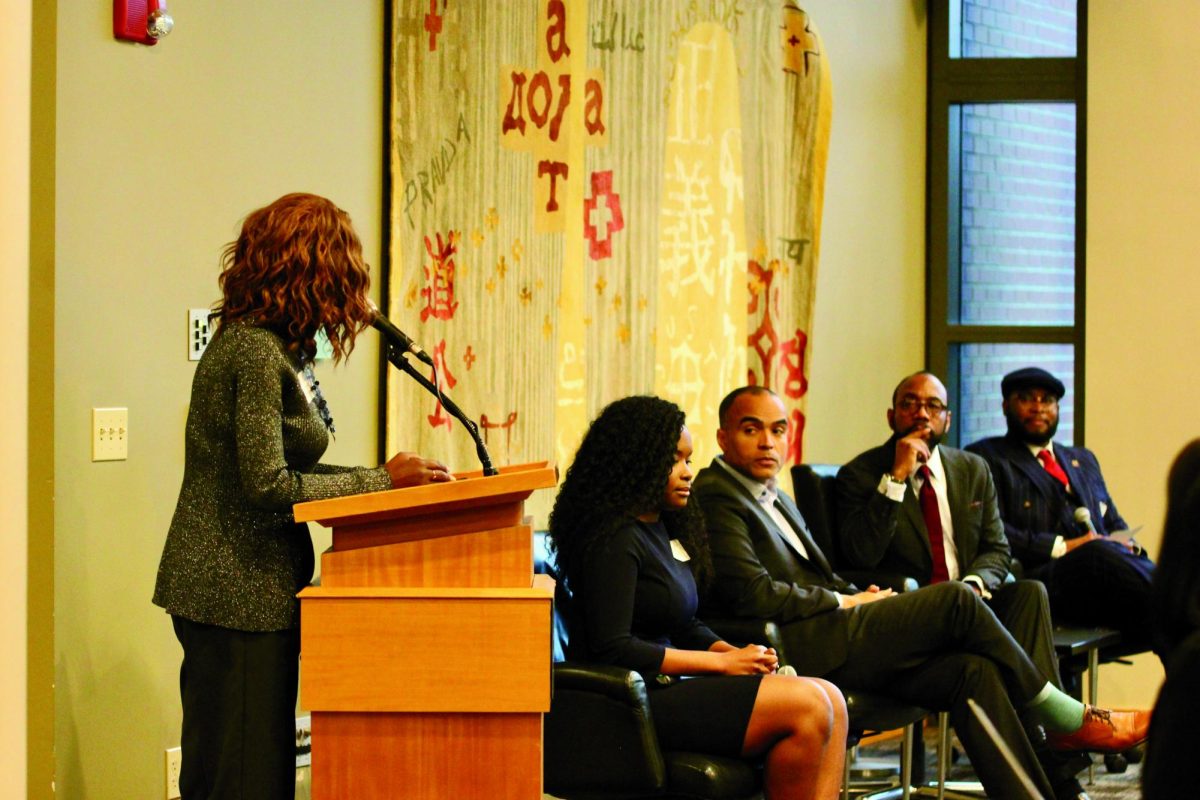
Last week, the King County Bar Association hosted a reception at the Seattle University School of Law honoring the legacy and life of Martin Luther King Jr. Students, faculty and other community members gathered to attend the panel that featured Washington State Attorney General Nick Brown and Cornell Brooks, a Harvard professor and former president of the National Association for the Advancement of Colored People (NAACP).
Both Brooks and Brown are alumni of Morehouse College, the alma mater of Martin Luther King Jr. and a leading HBCU known for producing successful Black activists, artists, intellectuals and more. At the beginning of the program, they both spoke about how the teachings of Martin Luther King Jr. influence their advocacy and public service in their careers and their pursuit of civil service as well as how impactful it was to attend the same institution as him.
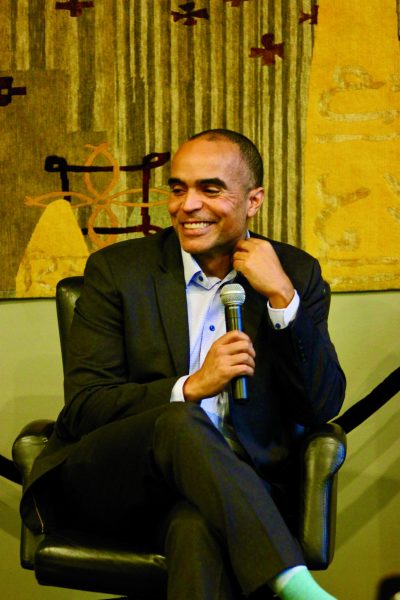
For Brown, attending Morehouse significantly shaped his identity and eventually influenced his career as a public servant.
“The impact it had on me as a young Black kid from Pierce County to transform to Atlanta, Georgia, to begin my higher education. To walk onto a campus that perhaps the best world leader in history walked on at a time,” Brown said.
Brown highlighted the importance of institutions such as Morehouse, which promote discipline and leadership attributes among their students.
The conversation then moved to focus on the growing mistrust of the public towards the government and the current administration. Brown weighed in, acknowledging the lack of transparency in law enforcement and the importance of public trust.
“Public trust is not a nicety; it’s a necessity. Transparency is how you rebuild trust,” Brown said.
Brown encouraged students to remain politically active and not to give up. He emphasized the importance of voting and who really holds the power.
“You have far more power locally than you think. Most of the decisions affecting your life are not being made in Washington, D.C.—they’re being made at City Hall and in state legislatures,” Brown said.
When asked about parallels between what immigrants are facing and what the African American community faced during the Reconstruction era, Brown addressed the existence of prejudice and racism in the past and the current.
“It’s dangerous to equate one marginalized community’s experience with another, but fear and racism driven by power always look familiar,” Brown said.
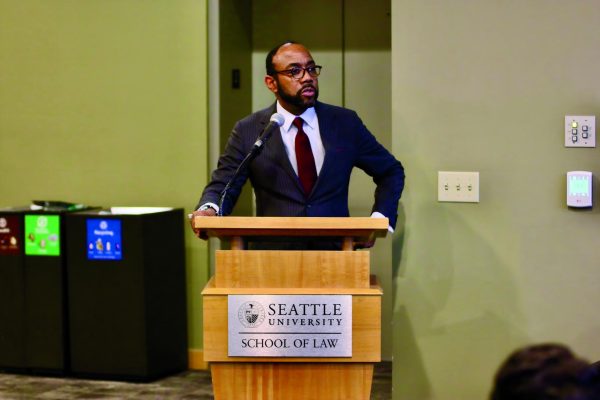
Brooks acknowledged the current political divide and how it is doing more harm than good. In the past, the Civil Rights movement was composed of people from many different walks of life, united by a common goal. They were able to put their differences aside to fight injustice, and Brooks highlighted that more of that is needed in today’s current movement.
“Lawyers can’t just talk to lawyers. We need bigger coalitions. Sometimes progress requires working with people you don’t want to be seen with,” Brooks said.
Braelyn Scheer, a first-year law student, attended the panel and shared her key takeaways.
“In this moment in particular, seeing the reporting coming from Minneapolis, it’s a difficult and heavy moment. Our communities are not feeling safe right now, and they’re under attack in my opinion. These are the consequences of dehumanization, and it’s ruining lives,” Scheer said.
Scheer described how current events impact her commitment to social justice and her passion for advocacy and civil rights.
“The overarching lesson, we’re watching in real time the active dehumanization of an entire community of people who help build and shape our communities. So wanting to be a lawyer and someone who identifies as being passionate about the civil rights of everyone. I don’t know where my career is going to lead me but I do know that whatever I do I need to be affirming the humanity of whoever I am working with,” Scheer said.
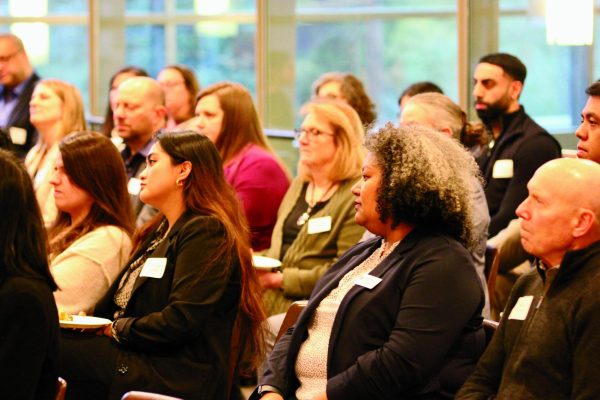
Scheer stressed the importance of staying active and not giving up, despite how distressing today’s social issues can be. However, the current events in Minneapolis and across the country have highlighted prejudices that weren’t previously prevalent. Scheer referenced a comment from Brooks about how today’s climate reflects the reconstruction of Black American rights expanding and then severely contracting, which leaves Scheer scared for what’s to come.
The event honored the legacy of Martin Luther King Jr., then shifted to those who carried the torch for the next generation. Now, as that torch is passed to Generation Z, the responsibility extends beyond preserving their legacy to continuing the work, beating the odds and most importantly breaking the division.